





What's Happening?
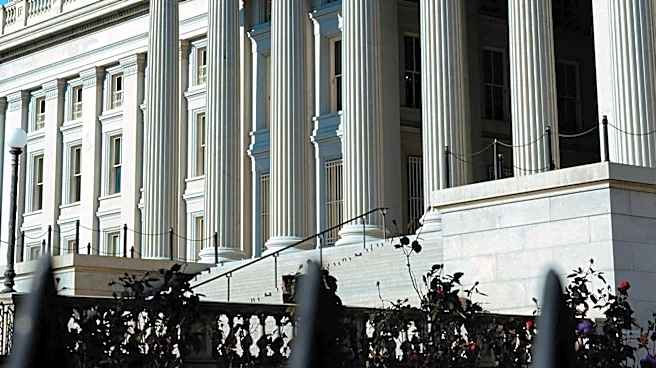
Florida Senator Rick Scott has publicly challenged Turkey's role as a U.S. ally, stating, 'Turkey is NOT OUR FRIEND,' after the Treasury Department imposed sanctions on a Turkish bank. The Treasury Department designated Turkey-based Golden Global Yatirim
Bankasi and two subsidiaries under 'Operation Economic Outcast' for allegedly facilitating tens of millions of dollars in transactions for Iran's Islamic Revolutionary Guard Corps-Quds Force (IRGC-Quds Force) and providing Iran with correspondent banking access. Senator Scott, who serves on both the Armed Services Committee and the Foreign Relations Committee, emphasized that these actions by Turkey pose significant security risks to the United States. He highlighted that the Treasury's move was a necessary step to hold entities accountable for funding Iranian terrorists who are reportedly harming U.S. servicemen and women. The sanctions block the designated entities' U.S.-linked property and prohibit U.S. persons from engaging in transactions with them, while also warning foreign institutions of potential secondary-sanctions exposure.
Why It's Important?
Senator Scott's strong condemnation of Turkey's actions underscores growing tensions in the U.S.-Turkey relationship, despite Turkey being a NATO member and hosting critical U.S. military infrastructure like Incirlik Air Base. This development is important because it highlights the U.S. government's commitment to disrupting financial networks supporting the IRGC-Quds Force, which is designated as a terrorist organization. The sanctions aim to cut off Iran's access to international financial systems, thereby limiting its ability to fund destabilizing activities. For the U.S., maintaining pressure on Iran's financial operations is a key component of its national security strategy. The criticism from a prominent U.S. Senator also signals potential shifts in U.S. foreign policy towards Turkey, particularly as Ankara expands its military and political influence in regions like Syria and adopts an increasingly confrontational stance towards Israel. This could lead to further diplomatic and economic repercussions for Turkey, impacting its standing within NATO and its broader international relations.
What's Next?
The Treasury Department's sanctions on Golden Global Yatirim Bankasi and its subsidiaries are part of an ongoing effort to tighten economic pressure on Iran. Treasury Secretary Scott Bessent has warned that financial institutions continuing to support Iran's financial networks will face consequences, indicating that more sanctions could be forthcoming against other entities globally. This suggests a continued focus on 'Operation Economic Outcast' and a broader enforcement of sanctions against those who facilitate transactions for the IRGC-Quds Force. Senator Scott's remarks could also prompt further scrutiny of Turkey's foreign policy and its relationship with the U.S. within Congress. The U.S. government will likely continue to monitor Turkey's actions regarding Iran and its regional activities, potentially leading to further diplomatic discussions or punitive measures if Turkey's conduct is deemed to undermine U.S. security interests. The situation could also influence future legislative debates in the U.S. regarding foreign aid or military cooperation with Turkey.
Beyond the Headlines
The incident reveals deeper complexities in international alliances and the challenges of maintaining cohesive foreign policy among NATO members. Turkey's alleged financial dealings with Iran, a U.S.-designated state sponsor of terrorism, highlight a divergence in strategic interests that could strain the long-standing U.S.-Turkey alliance. This situation raises questions about the efficacy of current diplomatic frameworks and the extent to which economic interdependence can be leveraged to influence geopolitical behavior. Furthermore, the U.S. Treasury's use of secondary sanctions against foreign entities underscores a broader strategy to enforce its financial regulations globally, compelling international actors to choose between engaging with the U.S. financial system or with sanctioned entities. This approach has significant implications for global financial institutions, forcing them to enhance their compliance measures to avoid exposure to U.S. penalties, and potentially leading to a fragmentation of the global financial landscape.