







What's Happening?
President Donald Trump announced that a deal with Iran is 'largely negotiated,' focusing on reopening the Strait of Hormuz and easing sanctions. The proposed framework includes a temporary cease-fire extension, allowing Iran to sell oil more freely while
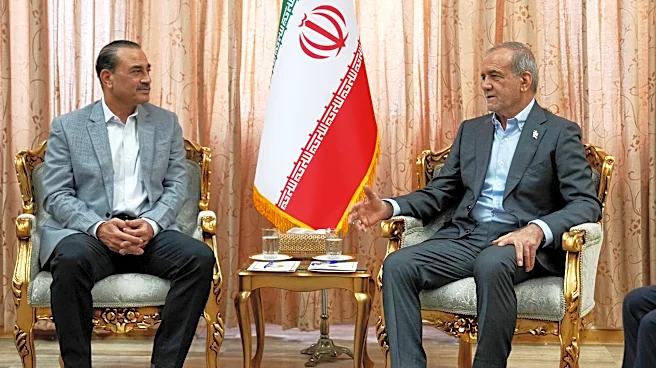
continuing negotiations on its nuclear program. Reports suggest the deal aims to reduce immediate risks, such as disruptions in global oil shipments, while leaving more complex issues for future talks. Despite progress, core disputes like Iran's enriched uranium and sanctions relief remain unresolved. The talks involve regional diplomacy, with intermediaries like Pakistan playing a role, though Iranian officials have pushed back on some of Trump's claims.
Why It's Important?
The potential agreement could significantly impact global oil markets by stabilizing the Strait of Hormuz, a critical passage for crude shipments. Easing tensions in this region may lower oil prices and improve energy logistics, benefiting global economies. However, unresolved issues like Iran's nuclear capabilities and sanctions relief could prolong uncertainty. The negotiations reflect broader U.S. efforts to manage Middle Eastern conflicts and maintain regional stability, with implications for international relations and security.
What's Next?
The next steps involve finalizing the agreement's details, including the cease-fire extension and sanctions terms. A formal announcement would clarify the status of the Strait of Hormuz and Iran's oil exports. Market reactions will likely hinge on the deal's impact on shipping risks and oil prices. If negotiations falter, the situation could remain volatile, affecting global energy markets and diplomatic relations.