





What's Happening?
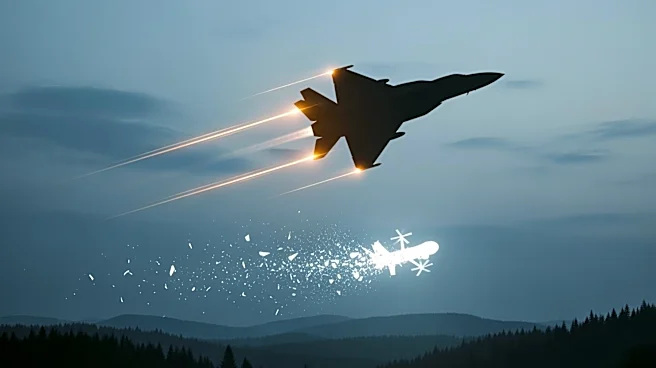
A NATO fighter jet, specifically a Romanian F-16, shot down a Ukrainian drone over southern Estonia. This incident is part of a series of similar occurrences where Ukrainian drones, intended for Russian targets, have inadvertently entered NATO airspace.
Estonia's Defense Minister, Hanno Pevkur, stated that the drone was likely meant to target Russian sites. The incident has raised concerns about the potential for the conflict between Ukraine and Russia to spill over into NATO territories. Ukraine has apologized for the incident, emphasizing it was unintended, and is working with Estonia to prevent future occurrences. Meanwhile, Russia has issued threats of retaliation if Ukrainian drones are launched from Baltic countries.
Why It's Important?
The downing of the Ukrainian drone by a NATO jet highlights the delicate balance NATO must maintain in supporting Ukraine while avoiding direct involvement in the conflict with Russia. This incident underscores the risks of miscalculation and accidental escalation that could draw NATO into the conflict. The situation also reflects the broader challenges of managing cross-border military operations in a region with complex geopolitical dynamics. As Ukraine continues to enhance its drone capabilities, the potential for similar incidents increases, necessitating careful coordination and communication between NATO and Ukraine to prevent unintended consequences.
What's Next?
In response to this incident, NATO and Ukraine are likely to enhance their communication and coordination to prevent future airspace violations. Estonia and other Baltic states may also review their air defense protocols to better manage such situations. Additionally, diplomatic efforts may intensify to address the underlying tensions and prevent further escalation. Russia's threats of retaliation could lead to increased military readiness in the region, further complicating the security landscape. The international community will be closely monitoring these developments to assess the potential impact on regional stability.