





What's Happening?
Republican Congressman Carlos Giménez of Florida has reacted to the potential guilty plea of businessman Alex Saab, who is expected to appear before a federal court in Miami to change his plea. Giménez expressed satisfaction that Saab will face justice
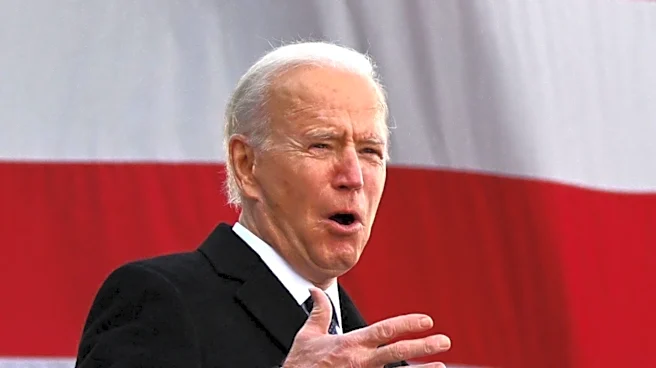
in the U.S., but also criticized the Biden administration for a pardon granted to Saab in 2023. The Congressman labeled Saab a 'pathetic criminal' and stated that his release by the 'corrupt Biden Administration' was regrettable. Giménez emphasized that Saab must answer for allegedly stealing from the Venezuelan people. He also called for similar legal action against other figures associated with the Chavista regime, specifically naming Nicolás Maduro, his wife Cilia Flores, and Diosdado Cabello. Saab is accused of conspiring to create shell companies, falsify shipping records, and divert funds from state contracts intended for food imports to Venezuela during a period of scarcity. He was indicted in 2019, arrested in Cabo Verde the same year, and later pardoned by President Biden in exchange for the release of several Americans imprisoned in Venezuela.
Why It's Important?
This development is significant for U.S. foreign policy, particularly concerning Venezuela and the broader fight against corruption and money laundering in Latin America. Congressman Giménez's strong condemnation of Alex Saab and his criticism of the Biden administration's pardon highlight ongoing political divisions within the U.S. regarding engagement with the Venezuelan regime. The call for accountability for Maduro, Flores, and Cabello signals a continued push from some U.S. lawmakers to exert pressure on the Venezuelan government through legal and financial means. The case of Alex Saab, a key figure in alleged corruption schemes linked to Venezuela, underscores the U.S. commitment to prosecuting individuals involved in illicit financial activities that impact U.S. interests and international stability. The controversy surrounding his pardon also raises questions about the balance between humanitarian concerns (securing the release of U.S. citizens) and the pursuit of justice for alleged financial crimes, a dilemma that often faces U.S. administrations in complex international negotiations.
What's Next?
Alex Saab is scheduled to appear before Judge Kathleen Williams for a change of plea hearing, where he is expected to plead guilty to money laundering charges. This will likely lead to a sentencing phase, the details of which will be closely watched by those interested in U.S.-Venezuela relations and anti-corruption efforts. Congressman Giménez's continued advocacy suggests that pressure on the Biden administration regarding its Venezuela policy and the accountability of Venezuelan officials will persist. Further actions against Maduro, Flores, and Cabello, as called for by Giménez, could involve additional sanctions, indictments, or other diplomatic and legal measures by the U.S. government. The outcome of Saab's case could also provide new insights into the financial networks supporting the Venezuelan regime, potentially leading to further investigations and enforcement actions. The broader implications for U.S. policy in Latin America will depend on how the administration balances its strategic interests with calls for justice and accountability.
Beyond the Headlines
The Alex Saab case transcends a simple legal proceeding; it delves into the complex interplay of international diplomacy, humanitarian concerns, and the pursuit of justice. The decision to pardon Saab in exchange for U.S. prisoners highlights the difficult choices governments face when national security and human lives are at stake, often requiring compromises that are politically contentious. This situation also brings to light the ethical considerations of such exchanges, where alleged criminals may receive clemency in return for diplomatic gains. Furthermore, the case underscores the pervasive issue of corruption in resource-rich nations and the global networks that facilitate it. The U.S. pursuit of individuals like Saab, even after a pardon, signals a long-term commitment to combating financial crimes that undermine democratic institutions and economic stability. The ongoing political debate in the U.S. regarding the handling of this case reflects deeper ideological divides on how best to address authoritarian regimes and protect U.S. interests abroad.