






What's Happening?
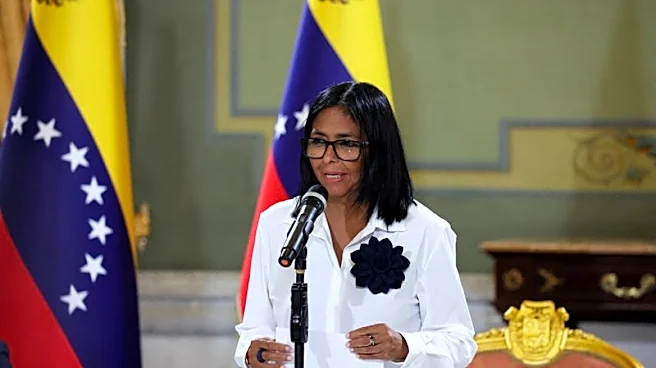
The Trump administration has instructed federal prosecutors in Miami to refrain from pursuing criminal investigations into Venezuela's acting President Delcy Rodríguez. This directive is part of an effort to stabilize relations with Venezuela following
the capture of Nicolás Maduro. Although Rodríguez has been on the radar of the U.S. Drug Enforcement Administration (DEA) since at least 2018, she has not been criminally charged in the U.S. The decision to pause scrutiny is intended to avoid disrupting the administration's diplomatic efforts and to facilitate U.S. investment in Venezuela. The Justice Department has stated that there was never an active investigation into Rodríguez to shut down. This move comes as the U.S. has lifted sanctions against Rodríguez, recognizing her as Venezuela's sole head of state, which allows her to re-establish ties with Western banks and work with U.S. investors.
Why It's Important?
This development is significant as it reflects a shift in U.S. foreign policy towards Venezuela, focusing on diplomatic engagement rather than punitive measures. By easing pressure on Rodríguez, the Trump administration aims to foster a more stable environment for U.S. investments in Venezuela, which holds the world's largest petroleum reserves. The decision to halt investigations could also serve as a model for U.S. interactions with other adversarial nations, such as Iran and Cuba. However, this approach has drawn criticism from some U.S. lawmakers who argue that it undermines efforts to restore democratic order in Venezuela. The move highlights the complex balance between diplomatic strategy and legal enforcement in international relations.
What's Next?
The future of U.S.-Venezuela relations will likely depend on the continued diplomatic engagement and the potential for increased U.S. investment in Venezuela's oil sector. The Trump administration's strategy may face scrutiny from Congress, particularly regarding the lack of progress on democratic reforms in Venezuela. Additionally, the decision to pause investigations could set a precedent for how the U.S. handles similar situations with other countries. The administration may need to address concerns about the implications of using legal enforcement as a diplomatic tool, as well as the potential long-term impact on U.S. foreign policy credibility.