





What's Happening?
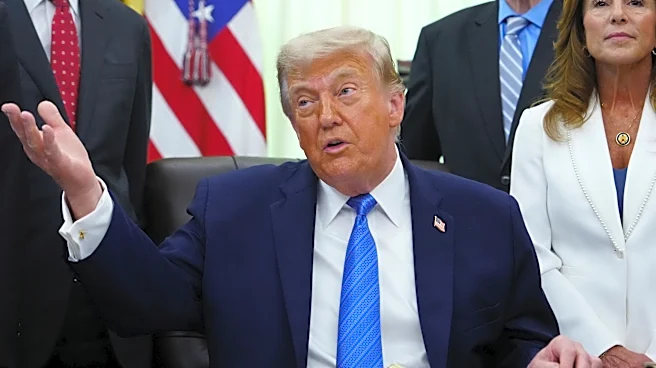
President Trump's efforts to pass the SAVE America Act before the 2026 midterms have stalled in the Senate. The act, which requires proof of U.S. citizenship to register to vote and photo ID to cast ballots, lacks the necessary votes to overcome a Senate filibuster.
Senate Majority Leader John Thune acknowledged the lack of support, indicating that more Republican seats are needed to pass the legislation. The act aims to enhance election integrity by preventing noncitizen voting, a rare occurrence according to research. Despite passing the House, the act faces significant Democratic opposition in the Senate, where a 60-vote threshold is required to advance most legislation.
Why It's Important?
The SAVE America Act is a key component of President Trump's legislative agenda, reflecting ongoing national debates over voting rights and election integrity. Its failure to advance highlights the challenges of enacting federal voting legislation amid partisan divisions. The act's requirements could impact voter access, particularly for those lacking citizenship documents, raising concerns about potential disenfranchisement. The legislative deadlock underscores the complexities of balancing election security with voter accessibility, a critical issue as the U.S. approaches the midterm elections.
What's Next?
With the Senate at an impasse, Republican leaders are looking to the midterm elections as a potential path forward for the SAVE Act. The outcome of these elections could shift the Senate's composition, potentially enabling the act's passage. Meanwhile, President Trump continues to emphasize the act's importance, framing it as essential to the party's electoral strategy. The ongoing debate over the act is likely to remain a focal point in discussions about election integrity and voting rights, influencing future legislative efforts in this area.