







What's Happening?
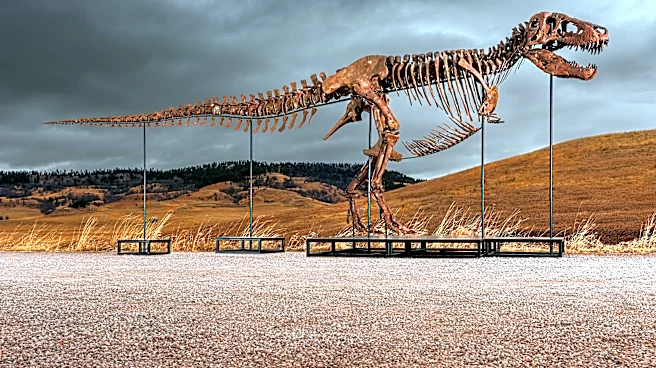
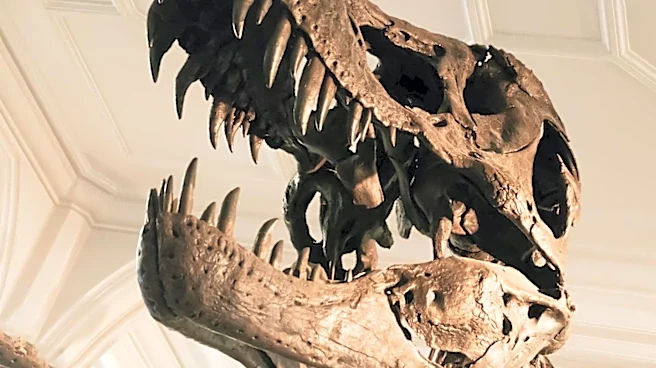
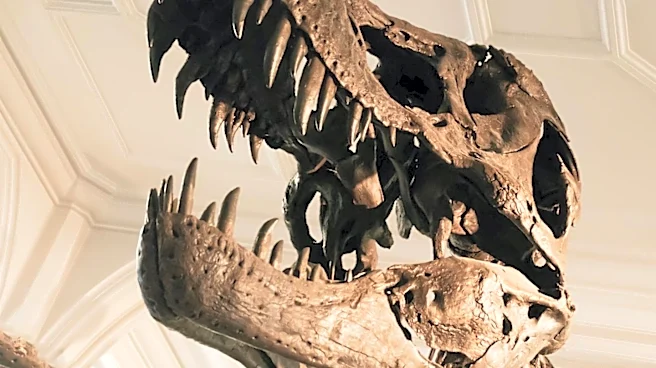
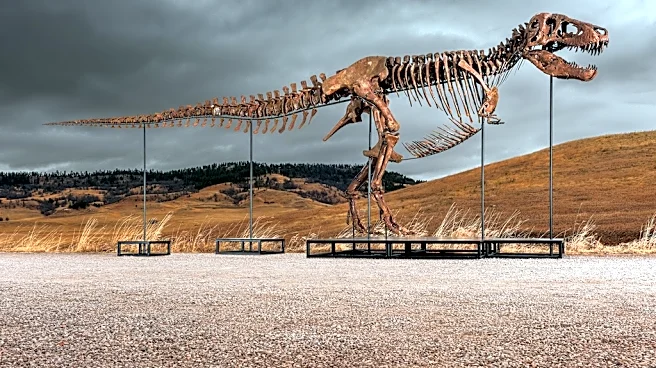
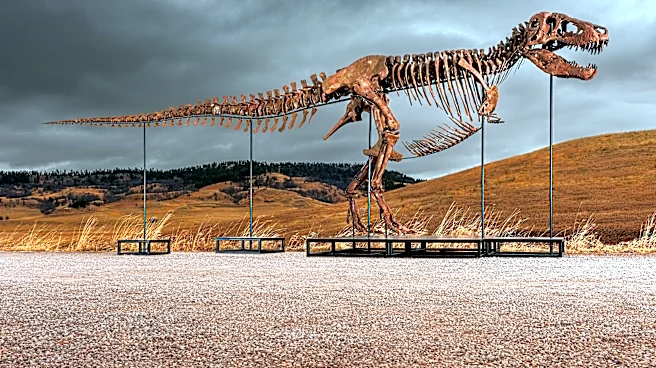
A 67-million-year-old Tyrannosaurus rex skeleton named Gus was sold for $50.1 million at Sotheby’s in New York, setting a new record for the most expensive dinosaur fossil ever auctioned. The sale, which took place on July 14, involved 19 bids and concluded
with a hammer price of $43 million before premiums. Gus, unearthed between 2021 and 2023 on a ranch in South Dakota, is one of the most complete T. rex specimens known, measuring about 38 feet long and 12.5 feet tall. The auction continues a trend of museum-grade fossils entering the luxury collectibles market, alongside contemporary art and rare watches. However, the sale has intensified criticism from scientists who argue that private ownership of such specimens limits their availability for research.
Why It's Important?
The sale of Gus highlights a growing trend where significant paleontological finds are being acquired by private collectors, often at prices beyond the reach of public institutions. This trend raises concerns among scientists about the accessibility of these specimens for research and education. Paleontologists like Richard Butler and Stephen Brusatte have expressed worries that high auction prices make these fossils accessible only to the super-rich, potentially removing them from public and scientific access. The situation underscores a broader issue of how scientific artifacts are valued and preserved, with implications for future research and public education.
What's Next?
The sale of Gus may prompt further discussions about the regulation of fossil sales and the need for incentives to keep important specimens in public collections. Museums, which often struggle to compete with private collectors, may advocate for policies that ensure key finds remain accessible for research and public display. Additionally, the scientific community may push for greater collaboration with commercial fossil hunters to ensure that significant discoveries are documented and studied before entering the private market.
Beyond the Headlines
The auction of Gus at Sotheby’s is part of a broader cultural shift where scientific artifacts are increasingly seen as luxury collectibles. This trend raises ethical questions about the commercialization of natural history and the role of private collectors in preserving or restricting access to scientific knowledge. The debate also touches on the responsibilities of auction houses and collectors in ensuring that important specimens are available for study and public education.