





What's Happening?
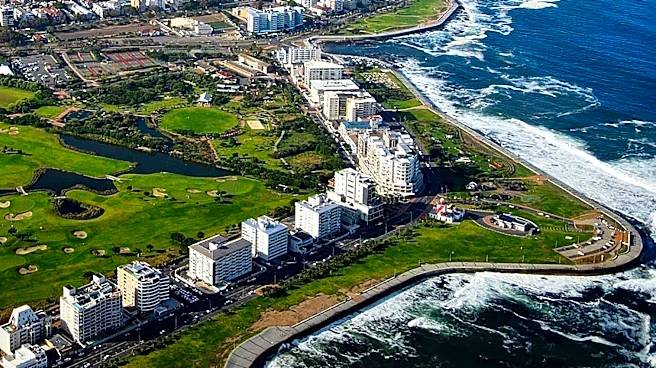
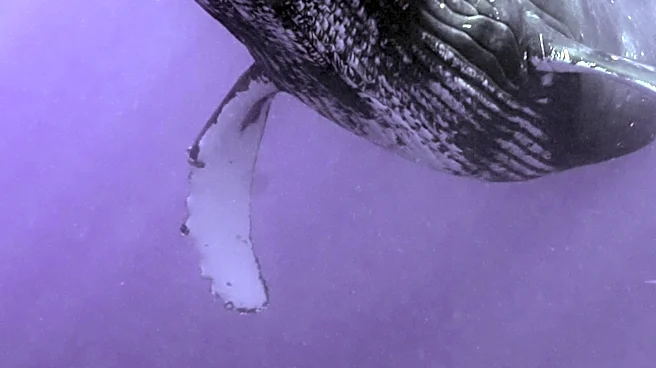
A significant gathering of nearly 300 humpback whales, termed a 'supergroup', was observed off the west coast of South Africa by Chris and Monique Fallows. This phenomenon is a positive sign of the species' recovery following the 1986 international ban
on whale hunting. The Fallows documented the event, noting the large number of whales in one area, which they likened to a 'Manhattan skyline' of whale breath plumes. This sighting is considered one of the largest groups of humpback whales recorded, according to Happywhale, an organization that tracks whale populations through citizen science. The resurgence of humpback whales, from fewer than 10,000 to over 100,000, is seen as a major conservation success. However, the increase in shipping traffic around South Africa, exacerbated by geopolitical tensions in the Middle East, poses new risks to these marine mammals.
Why It's Important?
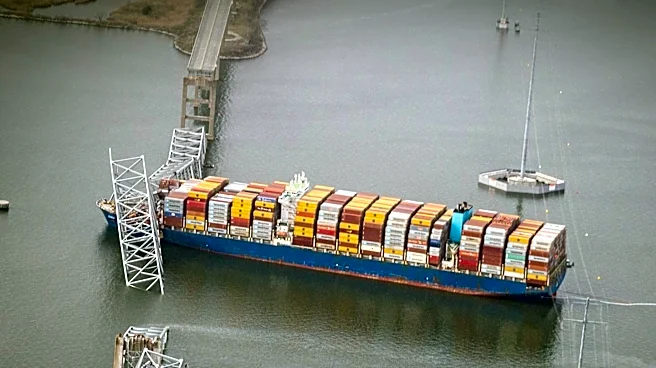
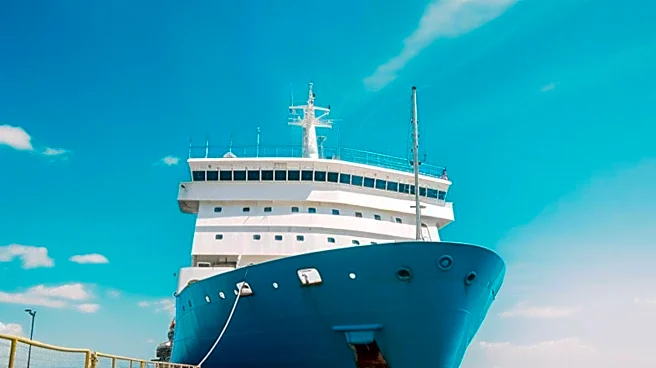
The recovery of humpback whales is a testament to the effectiveness of international conservation efforts, particularly the moratorium on commercial whaling. This resurgence highlights the potential for species recovery when protective measures are enforced. However, the increased shipping traffic due to conflicts in the Middle East, such as the Iran war, presents a new threat to these whales. The risk of ship strikes is heightened as more vessels are rerouted around Africa, potentially leading to more whale fatalities. This situation underscores the need for continued vigilance and adaptive management strategies to protect marine life from emerging threats.
What's Next?
Conservationists and scientists are advocating for the implementation of speed limits for ships near the South African coast to mitigate the risk of collisions with whales. This measure would allow ships more time to detect and avoid whales in their path. Additionally, ongoing monitoring and research are essential to understand the full impact of increased shipping on whale populations. The international community may need to consider further regulations to balance maritime commerce with marine conservation.
Beyond the Headlines
The situation highlights the complex interplay between conservation success and new environmental challenges. While the recovery of humpback whales is a positive development, it also illustrates how global geopolitical issues can have unintended consequences on wildlife. The need for comprehensive strategies that address both conservation and economic activities is crucial to ensure the long-term survival of marine species.