
What's Happening?
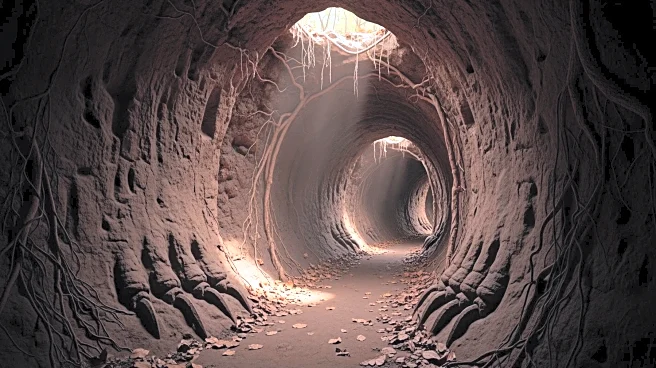
Scientists have discovered massive tunnels beneath the hills of southern Brazil and northern Argentina, which appear to have been carved into solid rock. These tunnels, some extending over 600 yards, are
believed to have been created by giant, extinct ground sloths. The tunnels do not follow natural river channels, show no signs of mining, and differ significantly from typical caves. The walls of these tunnels are marked with claw marks, suggesting they were dug by large animals. Heinrich Frank, a geologist at the Federal University of Rio Grande do Sul in Brazil, has led research mapping over 1,500 such burrows. These findings provide insights into the behavior and habitat of ancient megafauna, particularly the giant ground sloths, which lived during the Pleistocene epoch.
Why It's Important?
The discovery of these tunnels offers significant insights into the ecological and environmental history of South America. By understanding the behavior of extinct species like the giant ground sloths, scientists can better comprehend how these animals influenced their ecosystems. The tunnels serve as trace fossils, preserving evidence of ancient activity and providing a more comprehensive picture of Ice Age life. This research also contributes to the broader understanding of how the extinction of large animals affected soil composition and vegetation patterns, which is crucial for reconstructing past climates and ecosystems.
What's Next?
Further research and mapping of these paleoburrows are expected to continue, potentially uncovering more about the interactions between ancient humans and megafauna. As scientists study these tunnels, they may gain deeper insights into the distribution and behavior of extinct species across the Americas. This ongoing research could also inform current conservation efforts by highlighting the long-term impacts of megafauna on ecosystems.
Beyond the Headlines
The study of these tunnels not only sheds light on the past but also raises questions about the future of biodiversity and ecosystem management. Understanding the role of large animals in shaping their environments can inform current conservation strategies, particularly in the context of rewilding and restoring ecological balance. Additionally, these findings may inspire further exploration of other regions for similar paleoburrows, potentially leading to new discoveries about ancient life on Earth.