








What's Happening?
The planned peace talks between the United States and Iran have been postponed, according to Switzerland's Foreign Ministry. The talks were intended to finalize a provisional agreement aimed at ending military actions between the two nations. The framework
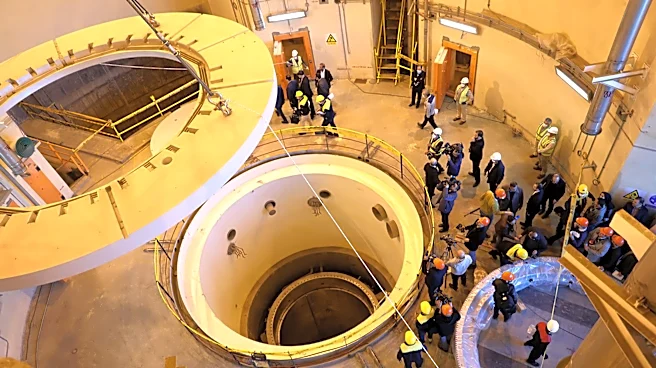
of the agreement includes a gradual lifting of U.S. sanctions on Iran and commitments by Tehran to halt its nuclear weapon development efforts. Despite the postponement, both sides have signed the document separately, indicating a willingness to move forward. The delay is attributed to logistical challenges, and preparatory work for the talks continues.
Why It's Important?
The postponement of the Iran-US peace talks is significant as it delays the resolution of longstanding tensions between the two countries. The agreement, if finalized, could lead to a reduction in military hostilities and economic sanctions, potentially stabilizing the region. The lifting of sanctions could provide economic relief to Iran, while the U.S. could benefit from reduced military expenditures and improved diplomatic relations. However, the delay highlights the complexities involved in international negotiations and the challenges of aligning interests between adversarial nations.
What's Next?
The next steps involve rescheduling the talks and addressing the logistical issues that led to the postponement. Both countries are expected to continue diplomatic engagements to ensure the agreement's progress. The international community, including mediators like Qatar and Pakistan, may play a role in facilitating the talks. The outcome of these negotiations could have far-reaching implications for regional stability and global diplomatic relations.