




What's Happening?
Climate experts in Israel are raising alarms about the increasing severity of weather patterns, which they attribute to climate change. According to Professor Oded Potchter from the Holon Institute of Technology and Professor Menachem Luria from the Hebrew
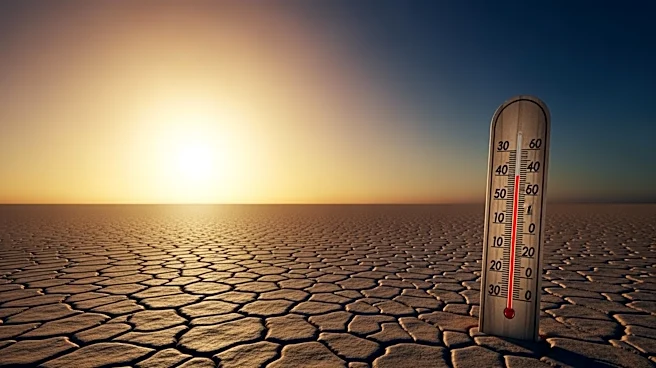
University, the frequency and intensity of dust storms have risen, exacerbating air pollution and posing health risks. They predict that by the end of the 21st century, regions such as the southern Arava, Eilat, and the Jordan Valley could become uninhabitable due to temperatures exceeding 50 degrees Celsius. The experts also highlight the role of the U.S. and China in global temperature rises due to their reliance on coal, which contributes significantly to emissions.
Why It's Important?
The potential uninhabitability of parts of Israel due to climate change has significant implications for the region's population and infrastructure. As temperatures rise and dust storms become more frequent, public health could be severely impacted, leading to increased healthcare costs and potential displacement of communities. The reliance on coal by major global players like the U.S. and China underscores the need for international cooperation in reducing emissions. The situation in Israel serves as a microcosm of the broader global climate crisis, highlighting the urgent need for sustainable practices and policies to mitigate these effects.
What's Next?
The experts suggest that the upcoming El Niño phenomenon, expected to start in July, could further intensify weather patterns, leading to a warmer and more unpredictable summer. This could prompt Israeli policymakers to prioritize climate adaptation strategies and invest in technologies to mitigate the impact of extreme weather. Additionally, there may be increased pressure on international bodies to address the global reliance on coal and promote cleaner energy sources.