
What's Happening?
The global mining industry is shifting towards sustainable practices by adopting circular economy strategies to manage mine water, which is rich in dissolved salts. A study published in the journal Resources
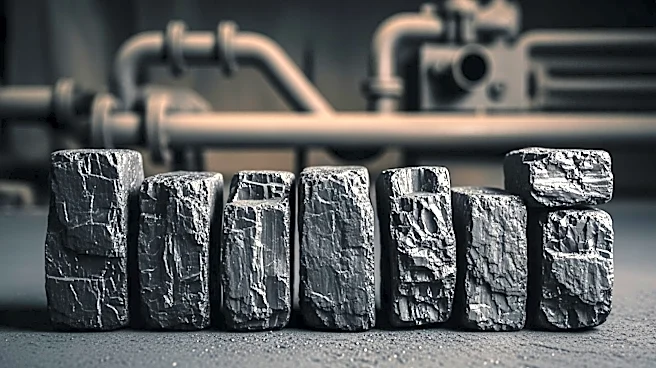
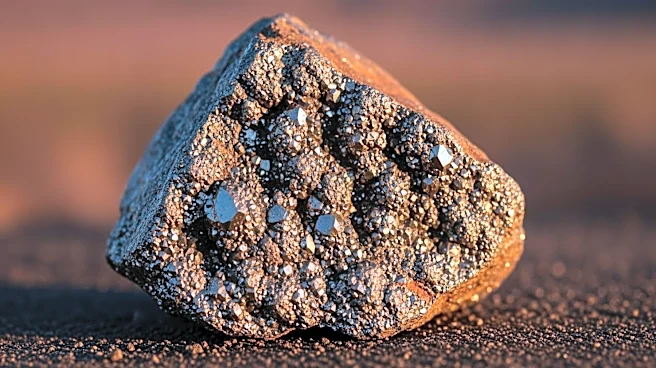
highlights the potential of treating mine water as a resource rather than waste, focusing on Poland's hard coal sector. The study reveals that approximately 1.5 million megagrams of dissolved mineral salts are discharged into surface waters annually. By employing desalination and mineral recovery techniques, the environmental impact can be reduced, enabling industrial reuse and sustainable post-mining development. This approach aligns with the United Nations Sustainable Development Goals, emphasizing the need for advanced water management systems to replace traditional disposal practices.
Why It's Important?
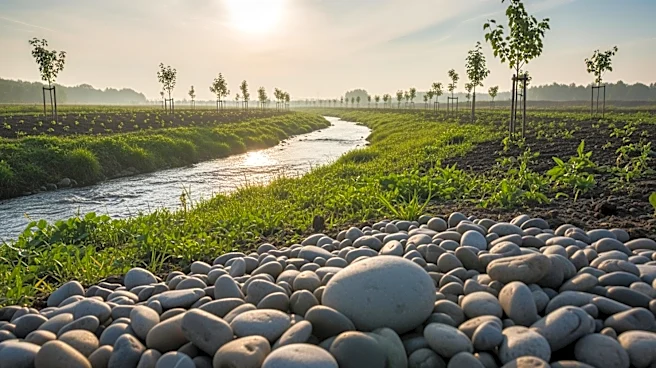
The transition to a circular economy in the mining industry is crucial for reducing environmental impacts and supporting sustainable development. By treating mine water as a resource, the industry can mitigate ecological damage, such as 'fish kill' events caused by elevated salinity in river systems. This shift not only addresses environmental concerns but also presents economic opportunities by transforming waste streams into valuable resources. The adoption of circular economy practices can enhance the economic resilience of mining regions, reduce the demand for virgin raw materials, and support regulatory compliance. This development is significant for regions undergoing mining transitions, where legacy salt discharges continue to affect water resources and local ecosystems.
What's Next?
Future efforts should focus on scaling recovery technologies and developing policies that support resource reclamation. By advancing circular economy models, the mining industry can transform persistent environmental challenges into opportunities for innovation. This approach will ensure more sustainable outcomes for affected regions, supporting both industrial and ecological restoration. The research underscores the importance of transitioning from a linear 'drain-and-discharge' model to a circular 'recover-and-reuse' system, which can significantly reduce long-term environmental impacts and contribute to sustainable post-mining development.