



What's Happening?
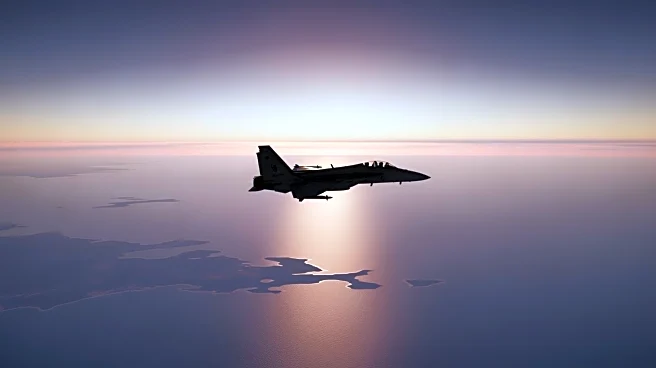
The United States deployed two F/A-18 fighter jets over the Gulf of Venezuela, marking the closest known approach of U.S. military aircraft to Venezuelan airspace. This mission, described by a U.S. defense official as a 'routine training flight,' was
conducted entirely within international airspace and aimed to demonstrate the aircraft's operational reach. The flight, which lasted approximately 30 minutes, follows a period of increased U.S. military activity in the region, including previous flights of B-52 and B-1 bombers along Venezuela's coastline. The heightened activity began after U.S. strikes on alleged drug-smuggling vessels in the Caribbean and Pacific, which the Trump administration justified as necessary to combat illicit drug trafficking. Venezuelan President Nicolás Maduro has denied these allegations.
Why It's Important?
This development is significant as it underscores the escalating military tensions between the United States and Venezuela. The proximity of U.S. military aircraft to Venezuelan airspace could be perceived as a provocative action, potentially exacerbating diplomatic strains. The U.S. has been actively targeting drug trafficking routes, which it claims are linked to Venezuela, thereby justifying its military presence in the region. This situation could impact U.S.-Venezuela relations and influence regional stability, as Venezuela may respond with increased military readiness or diplomatic protests. The ongoing military maneuvers also reflect broader U.S. strategic interests in maintaining influence and security in the Western Hemisphere.
What's Next?
Future developments may include further U.S. military operations in the region, potentially leading to diplomatic engagements or confrontations with Venezuela. The U.S. might continue to monitor and target drug trafficking routes, while Venezuela could seek to bolster its defenses or seek support from allies. The international community may call for dialogue to de-escalate tensions, and regional organizations could play a role in mediating between the two nations. The situation warrants close observation as it could influence U.S. foreign policy and military strategy in Latin America.