



What's Happening?
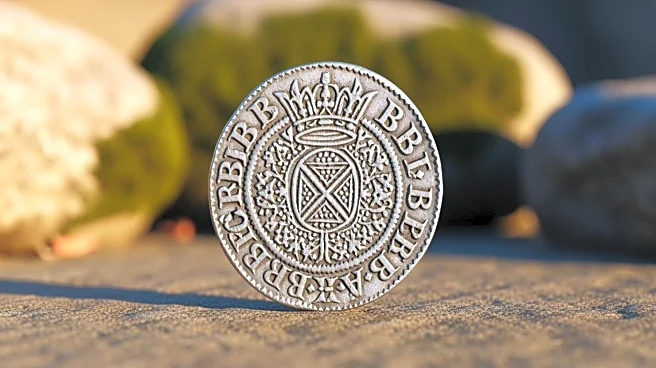
A 900-year-old coin, believed to be the oldest Scotland-made coin ever found, has been discovered by a metal detectorist near Penicuik, Scotland. The coin, which bears the image of King David I, a 12th-century ruler, has been acquired by the National
Museums Scotland. David I, who ruled from 1124 to 1153, is recognized for his significant contributions to Scottish history, including the introduction of the country's first coinage in the 1130s. The coin's discovery is particularly noteworthy as it is the earliest known example of a Scottish coin produced from a core Scottish mint, specifically in Edinburgh. The coin also features a cross-based design and an inscription indicating its origin. This find adds to the historical understanding of David I's reign, during which he expanded royal authority and established several mints across Scotland.
Why It's Important?
The discovery of this ancient coin is significant as it provides tangible evidence of Scotland's early monetary system and the influence of King David I. His reign marked a pivotal period in Scottish history, characterized by the expansion of royal authority and the establishment of civil institutions. The coin's existence underscores the historical importance of Edinburgh as a central hub for minting and governance during the 12th century. For historians and archaeologists, this find offers a rare glimpse into the economic and political landscape of medieval Scotland. It also highlights the role of numismatics in understanding historical governance and economic practices. The coin's preservation and study by the National Museums Scotland will likely contribute to ongoing research and public education about Scotland's rich historical heritage.
What's Next?
While there are no immediate plans for the public display of the coin, its acquisition by the National Museums Scotland suggests that it will be preserved and studied further. This discovery may prompt additional archaeological interest and exploration in the region, potentially leading to more findings related to Scotland's medieval history. The coin's historical context could also inspire educational programs and exhibitions aimed at enhancing public understanding of Scotland's past. As researchers continue to analyze the coin, it may provide new insights into the economic and political strategies employed by King David I, further enriching the narrative of Scotland's development during the 12th century.
Beyond the Headlines
The discovery of the coin also raises questions about the broader implications of historical artifacts in understanding cultural identity and heritage. As one of the few tangible links to King David I's reign, the coin serves as a symbol of Scotland's medieval past and its enduring legacy. It highlights the importance of preserving historical artifacts and the role they play in shaping national identity. Additionally, the find underscores the value of metal detecting and archaeological efforts in uncovering hidden aspects of history. The coin's preservation by a national institution ensures that it will remain a part of Scotland's cultural heritage, accessible for future generations to study and appreciate.