

What's Happening?
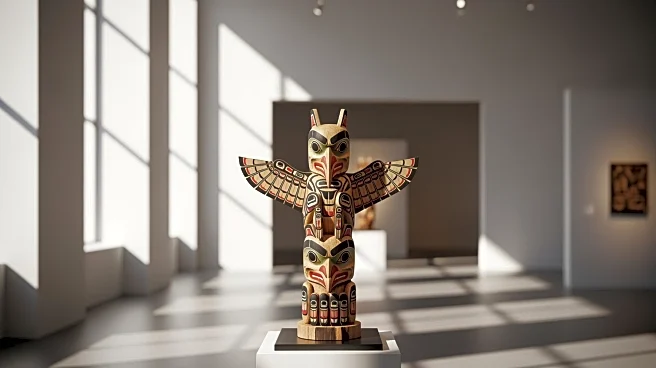
Contemporary Indigenous art is gaining significant recognition in major museums worldwide, showcasing its influence and cultural significance. The art world is increasingly acknowledging the contributions of Indigenous artists, with exhibitions featuring
Aboriginal art from Australia and Native art from the Americas. Notable events include the 2024 Venice Biennale, which highlighted Māori, Kaqchikel, and Nonuya artists, and the U.S. pavilion featuring Choctaw/Cherokee artist Jeffrey Gibson. Gibson's work, along with other Indigenous artists, challenges the traditional narrative that Indigenous art is static and historical, instead presenting it as dynamic and contemporary. The exhibitions emphasize the transformation of Indigenous art, blending traditional elements with modern techniques, and highlight the artists' ability to navigate between cultural heritage and contemporary expression.
Why It's Important?
The growing recognition of Indigenous art in major museums marks a significant shift in the art world, challenging long-held perceptions of Indigenous art as merely historical or static. This acknowledgment not only elevates the status of Indigenous artists but also broadens the understanding of art's role in cultural expression and identity. By showcasing Indigenous art, museums are fostering a greater appreciation for cultural diversity and the rich histories of Indigenous peoples. This movement also highlights the ongoing dialogue between traditional practices and contemporary art forms, offering new perspectives on cultural continuity and innovation. The increased visibility of Indigenous art can lead to greater opportunities for Indigenous artists and communities, promoting cultural preservation and economic empowerment.
What's Next?
As Indigenous art continues to gain prominence, more museums are likely to incorporate Indigenous works into their permanent collections and exhibitions. This trend may encourage further collaboration between Indigenous artists and cultural institutions, leading to new projects and initiatives that celebrate Indigenous heritage. Additionally, the art world may see a rise in academic research and publications focused on Indigenous art, contributing to a deeper understanding of its cultural and historical contexts. The increased interest in Indigenous art could also inspire educational programs and workshops, fostering a new generation of artists and art enthusiasts who appreciate and support Indigenous cultural expressions.
Beyond the Headlines
The recognition of Indigenous art in major museums raises important questions about cultural appropriation, representation, and the preservation of traditional knowledge. As Indigenous art becomes more mainstream, there is a need to ensure that artists retain control over their cultural narratives and that their work is presented with respect and authenticity. This development also highlights the broader issue of how cultural institutions can balance the desire to share Indigenous art with the need to protect sensitive cultural information. The dialogue surrounding Indigenous art may lead to new ethical guidelines and practices within the art world, promoting a more inclusive and respectful approach to cultural heritage.