



What's Happening?
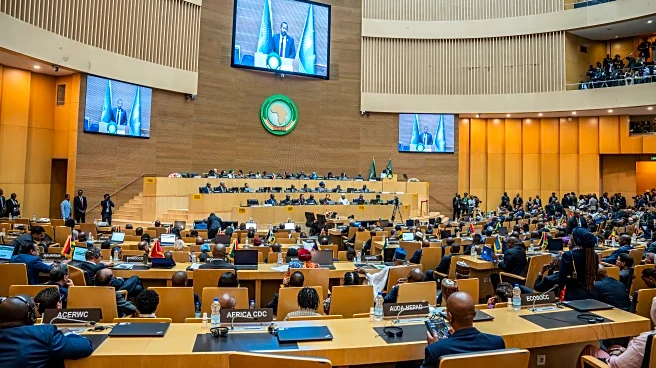
The National Economic and Social Development Board (NESDB) recently convened a significant meeting in Istanbul, bringing together key stakeholders including the International Cooperation Office, the Planning and Follow-up Department, and representatives
from the Ministry of Finance, the Islamic Development Bank, and the Islamic Organization for Food Security. This meeting aimed to mobilize international resources and enhance institutional coordination to support and implement food security programs in Libya. Discussions focused on analyzing the food basket, identifying funding gaps, and strengthening sectoral responses to ensure efficient resource allocation and sustainable developmental impact. The meeting is part of broader efforts to bolster economic and social stability in Libya through improved food security measures.
Why It's Important?
This meeting is crucial as it addresses Libya's ongoing challenges in achieving food security, a vital component for the country's economic and social stability. By mobilizing international resources and enhancing coordination among key institutions, Libya aims to improve its food security infrastructure, which is essential for supporting its population and fostering economic growth. The involvement of international organizations and financial institutions highlights the global interest in stabilizing Libya's food supply chain, which could lead to increased foreign investment and collaboration. This initiative also aligns with broader regional efforts to enhance food security in North Africa, potentially serving as a model for similar initiatives in neighboring countries.
What's Next?
Following the meeting, Libya is expected to implement the discussed strategies to improve its food security infrastructure. This includes potential collaborations with international partners to fund and support various projects aimed at enhancing food production and distribution. The NESDB and other involved entities will likely continue to engage with international organizations to secure the necessary resources and expertise. Additionally, Libya may explore further integration with North African countries to strengthen regional food security networks, which could lead to more comprehensive and sustainable solutions to the challenges faced by the region.