








What's Happening?
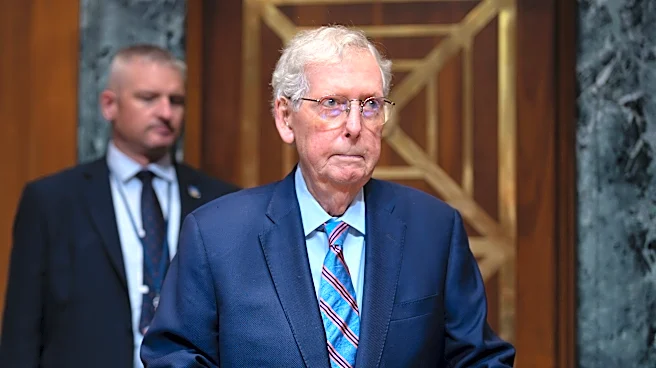
Senator Mitch McConnell, the 84-year-old Kentucky Republican, has been hospitalized for three weeks, with no clear information on the reasons for his admission or his current health status. His office has maintained a tight lid on details, only stating
that McConnell 'continues to improve' and is actively engaged with his staff on matters concerning Kentucky and the Senate. McConnell, a childhood polio survivor, has faced several health challenges in recent years, including a concussion and broken ribs from a fall in March 2023. Despite his hospitalization, McConnell has reportedly been in communication with GOP leaders and others, expressing a desire to return to the Senate. His absence has coincided with missed votes on significant legislation, including a major housing affordability bill.
Why It's Important?
The prolonged hospitalization of Senator McConnell, a key figure in the Senate, raises concerns about leadership stability within the Republican Party and the Senate at large. As the longest-serving Senate leader in history, McConnell's health and ability to fulfill his duties are of significant interest to both his constituents and the broader political landscape. His absence has already impacted legislative processes, with missed votes on critical issues such as housing and foreign policy. The lack of transparency regarding his health status may lead to increased speculation and uncertainty within political circles, potentially affecting party dynamics and legislative agendas.
What's Next?
As the Senate prepares to reconvene, all eyes will be on whether McConnell will be able to return to his duties. His office has not provided a timeline for his recovery or return, leaving room for speculation about potential interim leadership arrangements or shifts in Senate dynamics. The situation may prompt discussions among Republican leaders about succession planning and the future direction of the party's legislative strategy. Additionally, the handling of McConnell's health information could lead to calls for greater transparency from public officials regarding their health, especially those in key leadership positions.