




What's Happening?
The U.S. Nuclear Regulatory Commission (NRC) has issued a construction permit for the Long Mott Generating Station, an advanced nuclear power plant planned at Dow's Seadrift manufacturing complex in Texas. This approval marks a significant regulatory
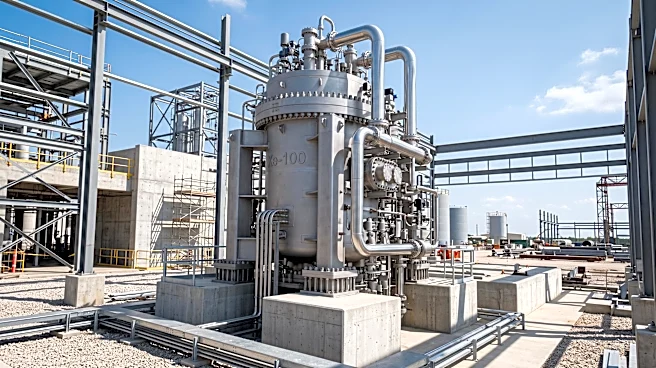
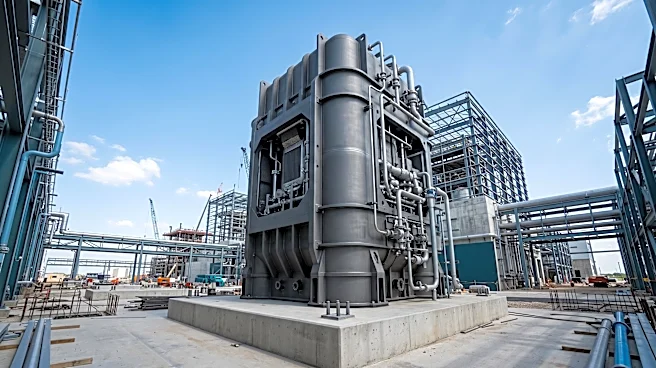
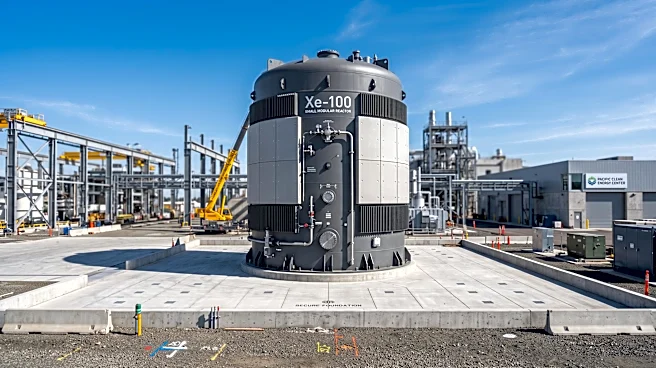
milestone, being the first U.S. construction permit for a high-temperature gas-cooled reactor in nearly 60 years. The facility, developed by Long Mott Energy (a Dow subsidiary) in collaboration with X-energy, will feature four Xe-100 small modular reactors (SMRs). Each reactor is designed to produce 80 MWe of electrical output and approximately 200 MWt of thermal output, totaling 320 MWe and 800 MWt. The plant aims to supply both electricity and high-temperature steam directly to Dow's industrial operations, replacing aging energy and steam-generation assets. The Xe-100 reactor uses helium as its primary coolant and graphite as its neutron moderator, with TRISO-X coated particle fuel in a pebble-bed core, allowing for online refueling. This project is part of the U.S. Department of Energy's Advanced Reactor Demonstration Program (ARDP).
Why It's Important?
This NRC approval is crucial for the advancement of next-generation nuclear technology in the U.S. It represents a significant step towards integrating advanced nuclear power directly into industrial manufacturing, offering a reliable and low-carbon energy source. The project's design to provide both electricity and high-temperature steam directly to Dow's chemical manufacturing complex demonstrates a novel application of nuclear energy beyond traditional grid supply. This could set a precedent for other energy-intensive industries seeking to decarbonize their operations and enhance energy independence. The use of SMRs and high-temperature gas-cooled reactor technology, with their inherent passive safety features and online refueling capabilities, could improve the economic viability and operational flexibility of nuclear power. Furthermore, this project supports the U.S. Department of Energy's efforts to accelerate the development and commercial demonstration of advanced nuclear technologies, potentially bolstering the domestic nuclear supply chain and creating new economic opportunities.
What's Next?
While the construction permit is a major regulatory achievement, it does not constitute a final investment decision or authorize reactor operation. Dow must complete further engineering and design work, assess project competitiveness, and obtain approval from its Board of Directors before committing to construction. A preliminary investment decision is anticipated in 2027. If the project proceeds, construction could commence later this decade, with start-up targeted for the early 2030s. The permit allows the project partners to advance engineering, prepare the operating license application, and develop the supply chain for long-lead equipment and materials. A separate NRC operating license will be required before the reactors can be fueled or operated. Key developments to monitor include Dow's investment decisions, the finalization of reactor design, and the appointment of engineering and construction contractors.
Beyond the Headlines
The Long Mott Generating Station project signifies a potential paradigm shift in industrial energy supply, moving towards a more localized and integrated approach to power and process heat generation. This model could reduce reliance on fossil fuels for industrial processes, contributing significantly to decarbonization goals. The regulatory 'firsts' achieved by the NRC in approving a multimodule advanced reactor facility and a pebble-bed reactor core under the Licensing Modernisation Project framework highlight the evolving regulatory landscape for advanced nuclear technologies. This project also underscores the broader implications for the flow-control industry, creating demand for specialized nuclear-grade valves, actuators, and instrumentation. The success of this project could influence future industrial siting decisions and accelerate the adoption of SMRs for various applications, potentially reshaping the energy infrastructure of heavy industries across the nation.