




What's Happening?
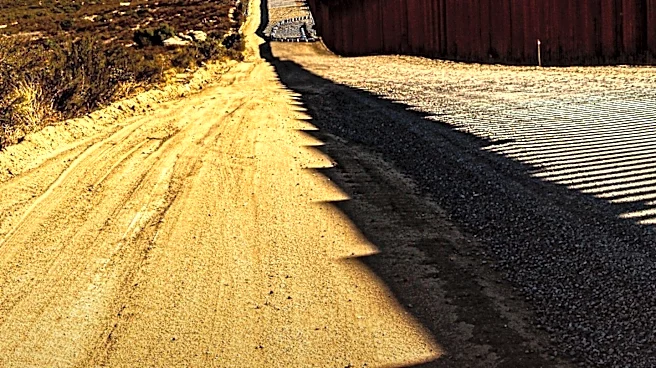
Construction has commenced on a segment of the Trump administration's 175-mile border wall in Hudspeth County, part of the Big Bend region, according to U.S. Customs and Border Protection (CBP). This specific project, known as 'Big Bend 1,' covers approximately
47 miles of a larger plan for a 30-foot-tall steel border wall. The construction began despite a recent lawsuit filed by a coalition of West Texas landowners against the Trump administration. The lawsuit challenges the administration's waiver of federal environmental laws for the project, arguing its illegality and seeking an injunction to halt all border wall construction in the region. While CBP's online map indicates construction is 'underway,' the exact start date remains unclear. Environmental advocates, including Laiken Jordahl from the Center for Biological Diversity, observed significant construction activity, such as large staging areas, concrete batching plants, and numerous earth movers, during a recent visit to the project site.
Why It's Important?
The initiation of border wall construction in the Big Bend sector carries significant implications for environmental protection, property rights, and federal policy. The lawsuit filed by West Texas landowners highlights a critical conflict between national security objectives and environmental regulations, specifically the waiver of federal environmental laws. This legal challenge could set a precedent for future infrastructure projects, particularly those involving federal land and environmental impact. The Big Bend sector has historically experienced low numbers of illegal border crossings, with apprehensions accounting for only 1.3% of all southern border apprehensions in 2025, according to CBP data. This raises questions about the necessity and cost-effectiveness of such extensive construction in an area with comparatively minimal border activity. The project also impacts local communities and landowners, who face potential displacement and environmental degradation, further fueling the debate over the balance between border security and local interests.
What's Next?
The legal battle between the West Texas landowners and the Trump administration is expected to intensify following the start of construction. The lawsuit seeks an injunction to halt all border wall construction in the region, including separate projects for steel vehicle barriers and roads within Big Bend National Park, which are currently paused due to other legal challenges. Clara Bensen, a board member of Conserve Big Bend, a plaintiff in the lawsuit, stated that the commencement of construction will likely strengthen their legal arguments. The outcome of this lawsuit could significantly influence the future of border wall projects, potentially leading to further delays, modifications, or even the cessation of construction in certain areas. Stakeholders, including environmental groups, landowners, and government agencies, will closely monitor the legal proceedings and their implications for border security policies and environmental conservation.
Beyond the Headlines
The ongoing construction of the border wall in the Big Bend region, coupled with the legal challenges, underscores deeper ethical and cultural dimensions surrounding land use and sovereignty. The waiver of environmental laws for such projects raises concerns about the long-term ecological impact on a unique and biodiverse region. Furthermore, the dispute highlights the tension between federal authority and the rights of individual landowners, particularly in areas with a rich history of ranching and land stewardship. The substantial federal contracts, exceeding $7 billion, awarded for border wall and related infrastructure across the Big Bend Sector, also bring into focus the economic implications and the allocation of taxpayer funds. This situation could trigger broader discussions about the efficacy of physical barriers as a primary solution for border security and the need for comprehensive approaches that consider environmental, social, and economic factors.