







What's Happening?
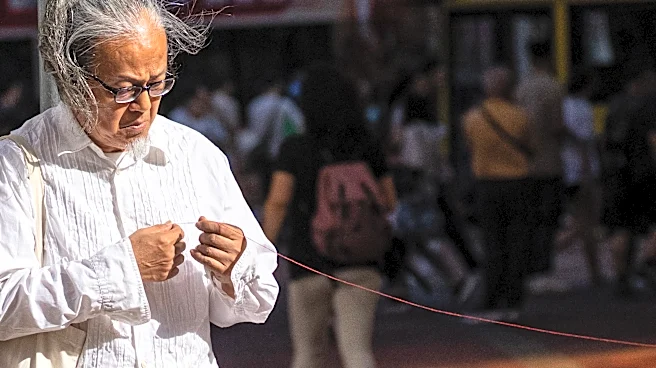
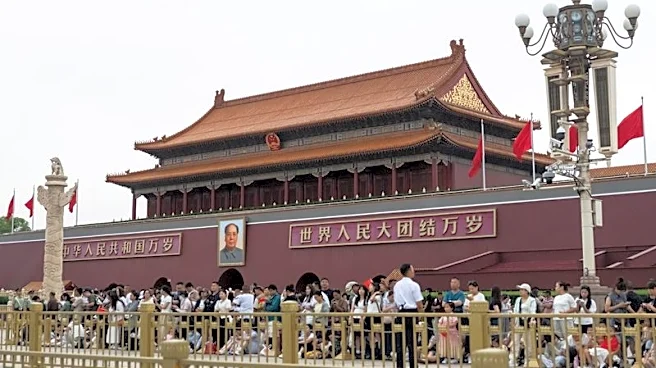
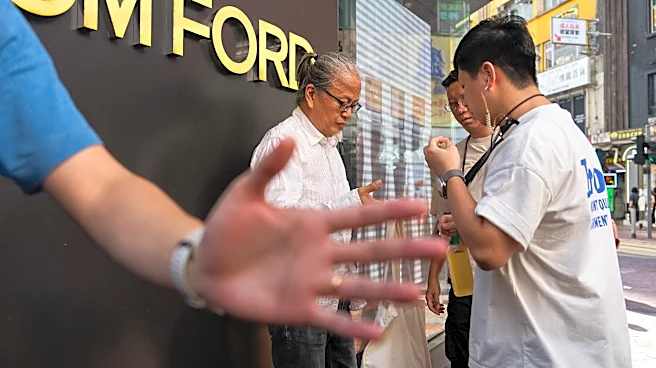
In Hong Kong, a performance artist named Sanmu Chen attempted to honor the victims of the 1989 Tiananmen Square crackdown by tying a symbolic red thread to a street signpost in Causeway Bay. This act was quickly stopped by police, highlighting the city's
diminishing freedom of expression. The red thread, measuring 6.4 meters, symbolized the date of the crackdown, June 4. Chen's attempt to commemorate the event comes amid increased sensitivity and restrictions on public acts marking the Tiananmen Square killings, which have been banned since 2020. The police stopped Chen, searched his bag, and then released him. This incident is part of a broader trend of reduced civil liberties in Hong Kong, where public commemorations of the crackdown have been increasingly suppressed.
Why It's Important?
The incident underscores the ongoing erosion of civil liberties in Hong Kong, a city that once held large-scale public commemorations of the Tiananmen Square crackdown. The suppression of such acts reflects the broader impact of the national security law imposed by Beijing in 2020, which has been used to silence dissent and arrest activists. This development is significant as it highlights the tension between Hong Kong's historical role as a bastion of free expression and the current political climate under Chinese rule. The suppression of commemorative acts also affects the international perception of Hong Kong's autonomy and the city's commitment to human rights.
What's Next?
As public commemorations in Hong Kong become increasingly restricted, it is likely that such acts of remembrance will continue to be driven underground or move to international platforms. Overseas communities may play a larger role in keeping the memory of the Tiananmen Square crackdown alive through vigils and rallies. The Hong Kong government's stance on national security and public order suggests that similar acts of commemoration will face continued suppression. The legal proceedings against former vigil organizers, who face charges under the national security law, will be closely watched as indicators of the future of civil liberties in the city.