







What's Happening?
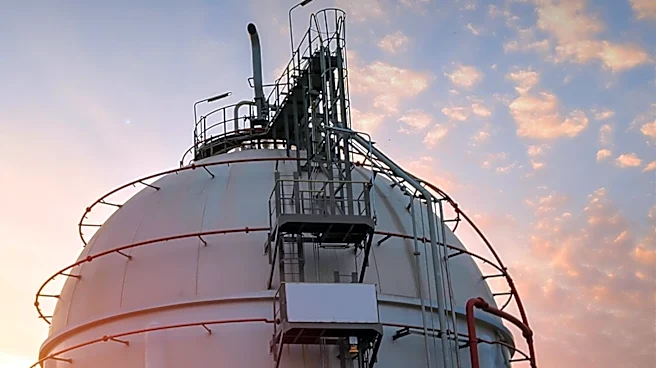
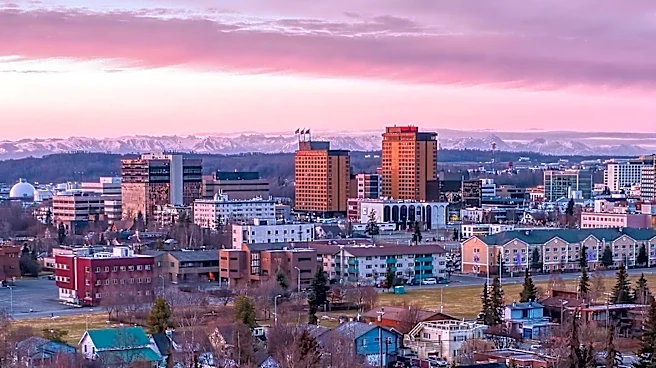
Southcentral Alaska is on the brink of a natural gas shortage, with demand projected to exceed supply as early as this winter. Natural gas accounts for nearly 60% of all energy consumed by Alaskans, with utility companies using the largest portion for electricity
generation, followed by residential and business customers. The core issue stems from Hilcorp Alaska, which holds a near-monopoly in the Cook Inlet region and announced in 2022 that it lacked sufficient gas for new contracts. This has significantly impacted utilities like Enstar Natural Gas, which supplies almost half of Alaska's population and relies heavily on Hilcorp. Homer Electric Association, serving the Kenai Peninsula, also sources about 85% of its power from Hilcorp. The problem is not a complete absence of natural gas in Cook Inlet but rather a scarcity of economically viable gas, as developers face higher costs to extract it, and the market for natural gas has contracted. This situation has led to uncertainty for consumers and utilities regarding future energy costs and supply reliability.
Why It's Important?
This impending natural gas shortage carries significant implications for Southcentral Alaska's economy and residents. Over 70% of Southcentral Alaska's electricity is generated from natural gas, meaning the shortage directly threatens power stability and affordability. Utility companies like Enstar and Homer Electric Association face increased operational costs as they seek alternative, more expensive gas sources or resort to burning diesel, which would lead to higher electricity bills for consumers. Matanuska Electric Association has even warned its nearly 60,000 members about potential rolling blackouts in a worst-case scenario. The crisis highlights the region's vulnerability due to its heavy reliance on a single energy source and a dominant supplier. Businesses could face increased operating expenses, potentially impacting profitability and employment, while households will likely see higher heating and electricity costs, straining personal budgets. The situation also underscores a broader debate within Alaska about whether to invest in finding more natural gas or transition to alternative energy sources.
What's Next?
In the short term, Southcentral Alaskan utilities are working on exchange agreements to secure gas supplies for the upcoming winter, with some utilities potentially sharing surplus gas in exchange for future reciprocation. Importing natural gas is a potential long-term solution, but it is several years away, with Enstar collaborating on an LNG import terminal in Nikiski projected for 2029, though its timeline is uncertain. This project would also lead to higher gas prices due to global market exposure. Residents are encouraged to adopt energy conservation measures, such as weatherization, using programmable thermostats, and installing energy-efficient lighting, to mitigate the impact of potential shortages and rising costs. Utility companies may issue 'Energy Watch Alerts' to guide consumer actions during periods of tight supply or extreme cold. The long-term energy strategy for Alaska remains unclear, with ongoing discussions about further Cook Inlet development versus pursuing large-scale projects like the Alaska LNG megaproject, which faces significant financial and logistical hurdles.
Beyond the Headlines
The natural gas crunch in Southcentral Alaska reveals deeper systemic challenges related to energy independence, infrastructure resilience, and economic sustainability in resource-dependent regions. The reliance on a single dominant producer, Hilcorp, has created a monopolistic environment where market dynamics are heavily influenced by one entity's operational decisions and economic viability assessments. This situation raises questions about regulatory oversight and the need for diversified energy portfolios to prevent future vulnerabilities. Furthermore, the debate between continuing to extract Cook Inlet gas and transitioning to other energy sources highlights the broader tension between economic development, environmental concerns, and long-term energy security. The potential for rolling blackouts and significantly higher utility bills could disproportionately affect lower-income households, exacerbating economic inequalities. This crisis may accelerate discussions on investing in renewable energy infrastructure and energy storage solutions to build a more resilient and sustainable energy future for Alaska, moving away from its historical reliance on fossil fuels.