



What's Happening?
A recent expedition in the Greenland Sea has uncovered the Freya Hydrate Mounds, the deepest cold gas seep ever recorded at a depth of 3,640 meters. This discovery was made by a remotely operated vehicle during the Ocean Census Arctic Deep expedition in May
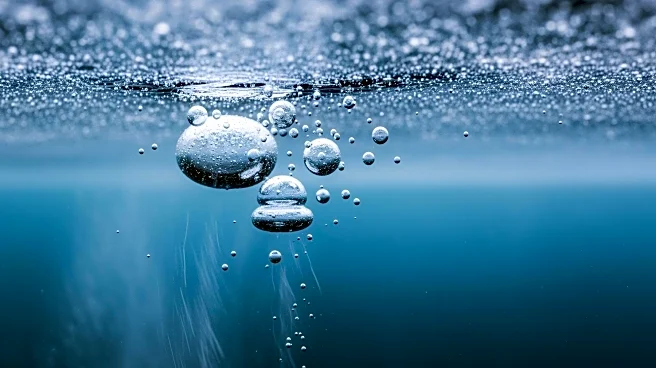
2024. The site, located on the Molloy Ridge, features intense biological activity and significant methane emissions, challenging previous assumptions about the sterility of deep Arctic ecosystems. The Freya Mounds are characterized by exposed gas hydrate deposits and a thriving biological community, including tube worms and crustaceans, which rely on chemosynthesis. This finding expands the known limits of gas hydrate systems, previously thought to exist at shallower depths.
Why It's Important?
The discovery of the Freya Hydrate Mounds has significant implications for understanding the global carbon cycle and deep-sea biodiversity. Gas hydrates, which trap methane, are one of the largest hidden reservoirs of greenhouse gases. The presence of these hydrates at extreme depths suggests a more complex interaction between geological processes and marine ecosystems than previously understood. This finding also highlights the potential ecological connections between different deep-sea habitats, which could play a crucial role in Arctic biodiversity. The discovery comes at a time when the Arctic seabed is being considered for mineral exploration, raising concerns about the environmental impact of such activities.
What's Next?
Following the discovery, Norway has paused the issuance of new deep-water mining licenses in the Arctic and suspended public funding for seabed mineral mapping until at least 2029. This decision aligns with the precautionary principle and international obligations to protect ocean ecosystems. The Freya site offers a unique opportunity to study methane dynamics and ecosystem responses to Arctic Ocean warming. Future policies on deep-sea mining and climate change will be critical in determining the fate of this newly discovered ecosystem. Scientists emphasize the need for careful management to preserve these vulnerable habitats.
Beyond the Headlines
The Freya Mounds discovery underscores the importance of protecting deep-sea environments from industrial activities. These ecosystems, described as island-like habitats, are sensitive to changes in tectonics and ocean conditions. The finding also contributes to the broader understanding of how methane emissions from the ocean floor can influence climate change. As the Arctic continues to warm, the stability of these gas hydrates and their role in the carbon cycle will be crucial areas of study. The Freya Mounds serve as a natural laboratory for observing these processes, offering insights into the resilience and adaptability of deep-sea life.