





What's Happening?
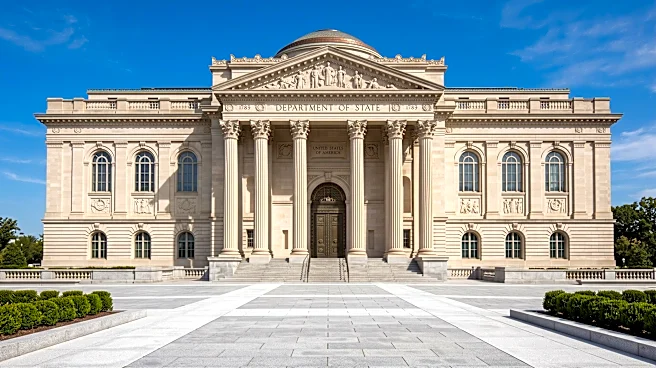
The U.S. Department of State has issued a Request for Information (RFI) for the design, construction, fit-out, maintenance, and eventual removal of the U.S. pavilion at Expo 2030 Riyadh. This pavilion is planned to be a roughly three-story structure located
in the Expo’s Technology district, offering between 5,000 and 6,000 square meters of exhibition space. This RFI marks a significant step in the United States' preparations for its participation in the upcoming global event in Riyadh. The initiative aims to gather market insights and potential partners for the ambitious project, ensuring the U.S. presence at the Expo is well-represented and technologically advanced.
Why It's Important?
The U.S. participation in Expo 2030 Riyadh is strategically important for several reasons. It provides a platform for the United States to showcase its technological advancements, cultural heritage, and economic prowess on a global stage. Engaging in such a high-profile international event can foster stronger diplomatic ties and economic partnerships with Saudi Arabia and other participating nations. For U.S. businesses, the pavilion offers an opportunity to explore new markets, attract foreign investment, and promote American innovation, particularly in the technology sector. The substantial exhibition space indicates an intent to make a significant impact, potentially leading to new trade agreements and collaborations that benefit U.S. industries and job growth. Furthermore, a strong U.S. presence can influence global perceptions and reinforce its leadership in various fields.
What's Next?
Following the issuance of the Request for Information, the U.S. Department of State will evaluate the responses from interested parties. This process will likely lead to a more formal procurement phase, such as a Request for Proposals (RFP), where specific bids for the design and construction of the pavilion will be solicited. Potential reactions from major stakeholders will include architectural firms, construction companies, and technology providers vying for the opportunity to contribute to the U.S. pavilion. The selection process will be critical in determining the final design and operational aspects of the pavilion. Over the coming months, further announcements are expected regarding the chosen partners and the detailed plans for the U.S. presence at Expo 2030 Riyadh, as the project moves from conceptualization to execution.
Beyond the Headlines
The U.S. commitment to a significant pavilion at Expo 2030 Riyadh extends beyond mere exhibition space; it reflects a broader strategy of public diplomacy and cultural exchange. Such large-scale international expositions serve as crucial venues for soft power, allowing nations to project their values, innovations, and aspirations. For the U.S., this involves demonstrating leadership in technology and sustainability, while also fostering cross-cultural understanding. The design and content of the pavilion will likely be carefully curated to convey specific messages about American ingenuity and its role in addressing global challenges. This engagement can also subtly counter narratives from competing global powers, reinforcing U.S. influence and partnerships in a rapidly evolving geopolitical landscape. The long-term impact could include enhanced international cooperation on critical issues and a strengthened image of the U.S. as a global partner.