
What's Happening?
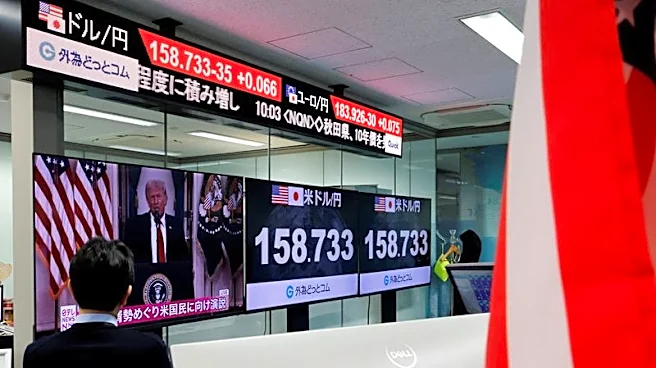
President Trump announced that the United States is considering a financial assistance plan for the United Arab Emirates (UAE), which includes a potential currency swap. This consideration comes amid ongoing
tensions involving the US and Israel's conflict with Iran. The UAE's central bank governor recently proposed the idea of a currency swap line during meetings with US Treasury Secretary Scott Bessent and Federal Reserve officials. This proposal aims to safeguard the UAE's economy in case the conflict exacerbates economic challenges. Despite these discussions, UAE Ambassador to the US, Yousef Al Otaiba, emphasized the resilience of the UAE's economy, stating that external financial backing is unnecessary.
Why It's Important?
The potential currency swap between the US and UAE highlights the strategic economic and political alliances in the Middle East. Such a move could strengthen bilateral relations and provide economic stability to the UAE, a key ally in the region. For the US, this could enhance its influence in Middle Eastern geopolitics, especially amid tensions with Iran. The financial support could also stabilize oil markets, given the UAE's significant role as an oil producer. However, it raises questions about the US's financial commitments and the implications for domestic economic policy.
What's Next?
If the currency swap proceeds, it could lead to further economic collaborations between the US and UAE. The decision may prompt reactions from other Middle Eastern countries, potentially influencing regional economic policies. US policymakers will likely evaluate the potential impacts on domestic financial markets and international relations. The ongoing conflict with Iran remains a critical factor, as its developments could affect the timing and nature of the currency swap agreement.