





What's Happening?
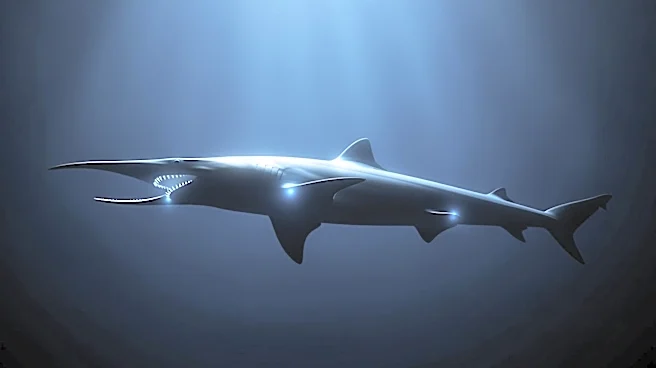
Researchers have captured the first live footage of goblin sharks in their natural habitat, significantly extending their known depth and geographic range. The University of Hawai'i at Mānoa-led team documented these sightings in the central Pacific,
including the Tonga Trench and near Jarvis Island. Previously, goblin sharks were only observed when caught by fishermen. These findings, published in the Journal of Fish Biology, reveal that the species can inhabit depths nearly 700 meters deeper than previously known. Goblin sharks are considered 'living fossils,' being the only surviving members of their family, which dates back 125 million years.
Why It's Important?
This discovery is crucial for understanding the biodiversity and ecological dynamics of deep-sea environments. By expanding the known range of goblin sharks, scientists can better assess the health and diversity of marine ecosystems. The findings also highlight the importance of continued exploration and study of deep-ocean habitats, which remain largely unexplored. This research could inform conservation strategies and policies aimed at protecting deep-sea species and their environments, ensuring the preservation of marine biodiversity.
What's Next?
Further research is expected to focus on exploring the habitats of goblin sharks and other deep-sea species to gain a more comprehensive understanding of their ecological roles. Scientists may also investigate the potential impacts of environmental changes on these newly discovered habitats. The inclusion of goblin sharks in regional biodiversity lists could lead to new conservation policies aimed at protecting these unique creatures and their environments.