


What's Happening?
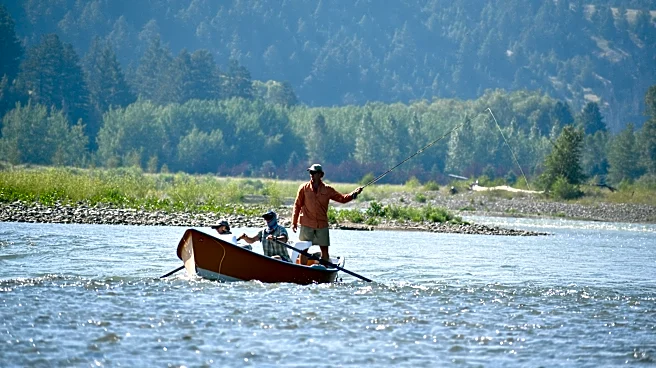
Fishing closures have become increasingly common in the Western United States due to record heat and drought conditions, which have significantly raised river temperatures to levels lethal for fish. This summer, Colorado has imposed restrictions on 19
rivers covering 635.5 miles, while Montana has expanded afternoon fishing restrictions to 1,200 miles of rivers. These measures aim to protect species like trout, which are highly sensitive to temperature changes. The closures, which typically occur from late June through early September, are a response to the ongoing heat and drought that have been exacerbated by climate change. The situation is unprecedented, with wildlife officials noting that such restrictions have become routine over the past decade.
Why It's Important?
The fishing closures have significant ecological and economic implications. Trout fishing is a major economic driver in many Rocky Mountain communities, attracting anglers from around the world. However, the rising temperatures and frequent droughts threaten the survival of trout, which require cool water to thrive. The closures not only aim to protect the fish but also highlight the broader impact of climate change on natural resources and local economies. As water levels drop and temperatures rise, the fishing industry faces uncertainty, with many visitors postponing trips to avoid the adverse conditions. This trend underscores the need for sustainable management of natural resources in the face of climate change.
What's Next?
Looking ahead, the continuation of these fishing restrictions is likely as climate change persists. Stakeholders, including wildlife officials and local businesses, may need to adapt by shifting fishing seasons or developing new strategies to mitigate the impact of heat and drought. The situation calls for increased awareness and action to address climate change and its effects on ecosystems and economies. As conditions worsen, there may be a push for more comprehensive policies to manage water resources and protect vulnerable species.
Beyond the Headlines
The fishing closures also raise ethical and cultural questions about the balance between recreational activities and environmental conservation. As climate change continues to alter natural habitats, communities may need to reconsider traditional practices and develop new cultural norms around resource use. The situation highlights the interconnectedness of environmental health and human activities, prompting a reevaluation of how society interacts with and impacts the natural world.