






What's Happening?
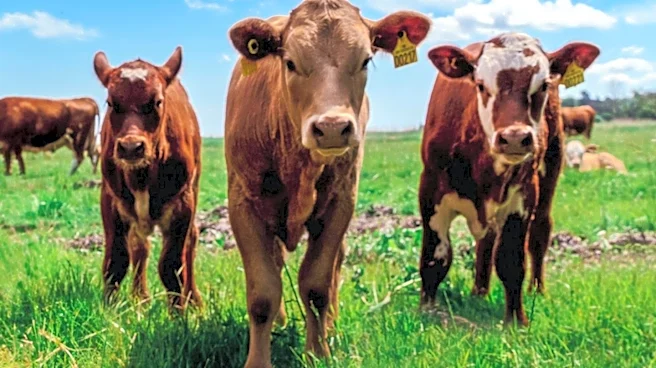
Current livestock grazing regulations, largely established in response to the 'cattle free by '93' movement, are outdated and lack the flexibility needed to manage public lands effectively, according to Rachel Gabel. These regulations, which date back
to when the Bureau of Land Management last updated them, do not account for rapidly changing environmental conditions, such as drought. Gabel argues that land managers and livestock grazers need the ability to make decisions on a weekly basis, rather than being constrained by rigid annual policies. The 'cattle free by '93' movement aimed to end cattle grazing on public lands, leading to policies like President Bill Clinton's Rangeland Reform '94, which sought to double grazing fees and shorten grazing seasons. While these efforts faced criticism and were largely unsuccessful, the underlying conflict between environmentalists and ranchers over public land use persists. The recent rescinding of the Public Lands Rule by the Biden administration, which would have elevated conservation to the same level as other multiple uses, is also highlighted as consequential, potentially allowing anti-ranching groups to outbid ranchers for grazing rights.
Why It's Important?
The inflexibility of current grazing regulations poses significant challenges for the sustainable management of public lands and the economic viability of rural communities. Livestock grazers play a crucial role in land conservation and wildfire mitigation, and their ability to adapt to environmental changes is essential for maintaining healthy rangelands. Outdated regulations can lead to suboptimal land management practices, potentially exacerbating issues like overgrazing in some areas or underutilization in others, especially during periods of drought. The ongoing conflict between environmental groups and ranchers over public land use highlights a broader tension between conservation goals and economic livelihoods. The potential for well-funded anti-ranching groups to acquire grazing rights could disrupt established agricultural practices, impact local economies dependent on ranching, and alter the ecological balance of public lands, including increasing wildfire risks due to unmanaged vegetation.
What's Next?
The call for updated and flexible grazing regulations suggests a need for policy reforms that allow land managers to respond dynamically to environmental conditions. This could involve implementing adaptive management strategies that permit more frequent adjustments to grazing plans based on real-time data and ecological assessments. Discussions are likely to continue regarding the balance between conservation, recreation, and agricultural uses of public lands. The rescinding of the Public Lands Rule indicates a potential shift in federal land management priorities, which could lead to further debates and policy adjustments. Stakeholders, including ranchers, environmental groups, and government agencies, will need to engage in collaborative efforts to develop regulations that support both ecological health and economic sustainability. The outcome of these discussions will shape the future of public land use and the livelihoods of those who depend on it.
Beyond the Headlines
The debate over livestock grazing regulations on public lands delves into complex issues of land stewardship, economic justice, and the role of government in managing natural resources. It highlights the tension between different visions for public lands: as pristine wilderness to be preserved, or as working landscapes that support local economies and traditional livelihoods. The 'Cows not Condos' movement, which emerged from the 'cattle free by '93' campaign, underscores the less obvious implication that removing grazing entirely might lead to alternative, potentially more impactful, forms of development. This discussion also touches upon the ethical dimensions of land use, questioning who has the right to dictate how public resources are utilized and how to achieve a balance that serves both human and ecological well-being. The long-term implications involve shaping the identity of Western U.S. landscapes and the sustainability of its rural communities.