






What's Happening?
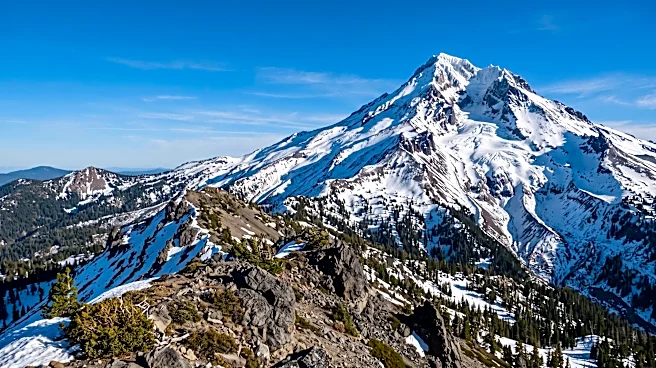
Three novice hikers from Roseville, California, were rescued from Mount Shasta after getting lost and spending a night in Mud Creek Canyon. The individuals informed rescuers that they had used Google’s Gemini AI to plan their expedition. They began their ascent
on Sunday at 3 a.m., aiming for the summit, and despite advice to turn around by noon, they reached the peak around 7 p.m. While descending in the dark, they lost their way, veering off the Clear Creek Route. One hiker sustained a knee injury, forcing the group to spend the night in a steep drainage. U.S. Forest Service climbing rangers and Siskiyou County sheriff’s search-and-rescue volunteers located and escorted them to the trailhead on Monday morning. The sheriff's office highlighted the importance of the 12 p.m. turnaround rule and recommended using multiple, including offline, methods for wayfinding, rather than solely depending on AI.
Why It's Important?
This incident underscores the potential risks associated with over-reliance on artificial intelligence for critical planning, especially in environments like mountaineering where conditions can be unpredictable and dangerous. The hikers were reportedly advised by Gemini AI to carry insufficient food and water, which became a significant issue during their multi-day ordeal. This event serves as a cautionary tale for the public regarding the limitations of AI in providing comprehensive and safety-critical advice for outdoor activities. It also emphasizes the need for human judgment, local expertise, and traditional safety protocols in high-risk situations. For AI developers, it highlights the necessity of incorporating robust safety disclaimers and potentially integrating more conservative advice for scenarios where human well-being is at stake, particularly as AI tools become more accessible and widely used for planning various activities.
What's Next?
Authorities, including the Siskiyou County sheriff’s office and the U.S. Forest Service, are likely to continue emphasizing traditional safety guidelines for hikers on Mount Shasta, such as the 12 p.m. turnaround rule and the importance of carrying adequate supplies and multiple navigation tools. There may be increased public awareness campaigns about the responsible use of AI for trip planning, particularly for challenging outdoor adventures. AI developers, like Google, might review and potentially refine the advice provided by their AI models for activities such as hiking and mountaineering to ensure it prioritizes safety and accounts for potential real-world variables and risks. This incident could also prompt discussions within the AI community about the ethical implications of AI-generated advice in high-stakes situations and the need for clearer warnings about the limitations of such tools.
Beyond the Headlines
This event touches upon broader societal implications concerning the integration of artificial intelligence into daily life and the evolving relationship between humans and technology. It raises questions about accountability when AI-generated advice leads to adverse outcomes, particularly in scenarios where human safety is compromised. The incident highlights a growing dependency on digital tools for planning, potentially diminishing critical thinking and preparedness for unforeseen circumstances. Ethically, it prompts a discussion on the responsibility of AI developers to ensure their algorithms do not inadvertently encourage risky behavior or provide incomplete information that could endanger users. Culturally, it reflects a shift towards seeking quick, technologically-driven solutions, even for complex activities that traditionally require extensive human experience and preparation. This incident could contribute to a broader re-evaluation of how AI is marketed and used for practical, real-world applications, especially those with inherent dangers.