






What's Happening?
CES 2025 showcased a significant shift towards 'Pragmatic AI,' emphasizing local processing and real-world utility in consumer electronics. Innovations focused on smarter homes, intuitive health monitoring, and advanced display technologies. Key developments
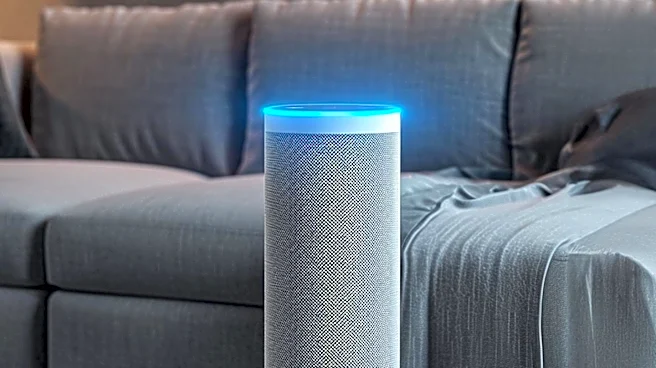
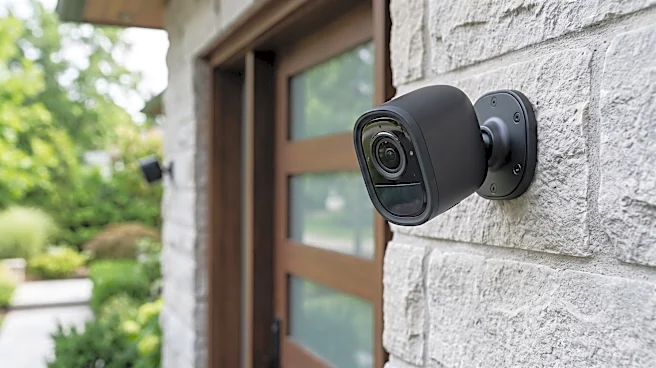
include AI-driven health monitoring integrated into smartwatches and rings, providing actionable advice for blood sugar management. Sleep technology has advanced with 'smart beds' and pillows using AI to detect and adjust for snoring or breathing irregularities, aiming to improve sleep architecture. Furthermore, smart home hubs are now processing voice commands and security camera footage locally using on-device Large Language Models (LLMs), enhancing privacy and reducing latency by keeping data on the device rather than sending it to the cloud. This 'Edge AI' approach is also being integrated into AI-native PCs, enabling complex generative tasks without an internet connection.
Why It's Important?
This shift towards 'Pragmatic AI' and 'Edge AI' has profound implications for U.S. consumers and industries. For consumers, it promises enhanced privacy as personal data remains on devices, reducing concerns about cloud-based data breaches and surveillance. The move to local processing also means faster, more responsive devices, improving user experience in smart homes and personal health monitoring. For the technology industry, it signifies a new direction in hardware development, with a focus on Neural Processing Units (NPUs) capable of handling complex AI tasks locally. This could lead to a competitive advantage for companies that successfully integrate these capabilities. The emphasis on real-world utility and active lifestyle management in health tech could also drive significant changes in how individuals manage their well-being, potentially leading to better health outcomes and reduced healthcare costs in the long term. The development of transparent displays and zero-gap foldables also indicates a move towards more integrated and aesthetically pleasing technology within living spaces.
What's Next?
The trends observed at CES 2025 suggest a future where AI is deeply embedded in everyday devices, operating with greater autonomy and privacy. Consumers can expect to see more products featuring on-device AI processing, leading to a more seamless and secure smart home experience. The integration of AI into health monitoring will likely continue to expand, offering more personalized and proactive health management tools. For manufacturers, the focus will be on further developing NPU-equipped hardware and optimizing software for local AI inference. This could lead to a new wave of innovation in AI-native PCs and smart home ecosystems. The automotive sector is also moving towards Software-Defined Vehicles (SDVs) that act as mobile living spaces, integrating with bidirectional charging, indicating a future where vehicles are not just transportation but also integral parts of the smart home and energy grid.
Beyond the Headlines
The move towards 'Pragmatic AI' and 'Edge AI' raises deeper questions about the future of data ownership and digital sovereignty. As more data is processed locally, individuals gain greater control over their personal information, potentially reshaping the power dynamics between consumers and large tech companies. This could also lead to new regulatory frameworks focusing on on-device data handling and privacy standards. Ethically, the increasing sophistication of AI in health monitoring and lifestyle management could lead to debates about the extent of AI's influence on personal choices and the potential for over-reliance on automated advice. Culturally, the integration of transparent displays and adaptive technology into homes suggests a future where technology is less obtrusive and more seamlessly integrated into daily life, blurring the lines between physical and digital environments. This shift could fundamentally alter how people interact with their living spaces and personal devices.