



What's Happening?
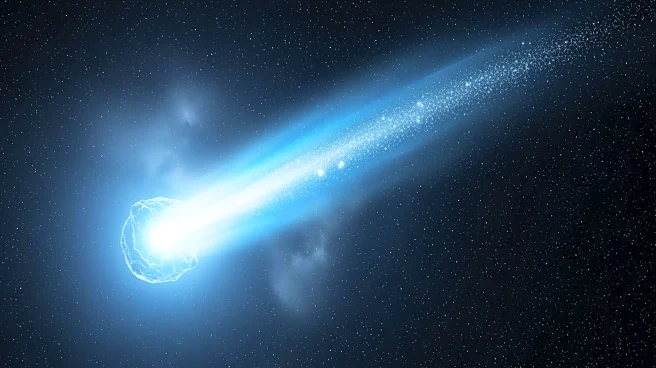
Interstellar comet 3I/ATLAS, discovered on July 1, 2025, by the NASA-funded ATLAS survey in Chile, has become a viral sensation. It is the third-known interstellar object to pass through our solar system, following 1I/'Oumuamua in 2017 and 2I/Borisov
in 2019. The comet, initially thought to be unique, was later found to resemble typical solar system comets with an icy nucleus and a coma. Despite this, sensational claims about the comet being an alien spacecraft spread rapidly on social media, fueled by a lack of official information during a U.S. government shutdown. Harvard professor Avi Loeb's non-peer-reviewed paper suggesting the comet might be alien technology further amplified public interest.
Why It's Important?
The viral interest in 3I/ATLAS highlights the challenges of misinformation in the digital age, especially when official channels are silent. The comet's discovery during a government shutdown allowed conspiracy theories to flourish, demonstrating the impact of timing and media dynamics on public perception. This event underscores the need for timely and accurate scientific communication to counteract sensationalism. The involvement of a respected academic like Avi Loeb in promoting unverified claims illustrates how authority can lend credibility to speculative ideas, influencing public discourse and media coverage.
What's Next?
As more data is collected about 3I/ATLAS, scientists continue to study the comet using Earth-based telescopes and space-based observatories. However, these scientific efforts may not capture the same level of public attention as the initial sensational claims. The focus will likely remain on understanding the comet's characteristics and behavior, contributing to our knowledge of interstellar objects. The scientific community may also need to address the broader implications of how misinformation spreads and the role of credible voices in shaping public understanding of scientific phenomena.
Beyond the Headlines
The 3I/ATLAS phenomenon reflects broader cultural and scientific challenges, including the tension between scientific inquiry and sensationalism. It raises questions about the responsibility of scientists and media in communicating complex topics to the public. The event also highlights the enduring fascination with extraterrestrial life and the influence of science fiction on public imagination. As society navigates the intersection of science, media, and public perception, the case of 3I/ATLAS serves as a reminder of the importance of critical thinking and evidence-based discourse.