




What's Happening?
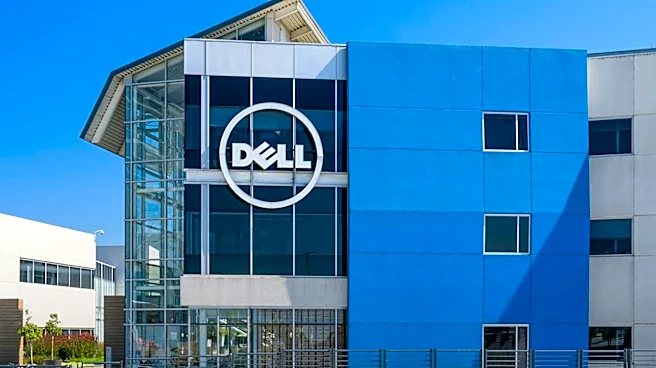
Japan has initiated a significant AI infrastructure development with a $15 billion data center project, a collaboration between Dell Technologies, Japanese power producer JERA, and UK-based AI infrastructure developer RHAELM. This first project, located
at JERA’s Chiba Thermal Power Station, is designed to support up to 400 megawatts of capacity, with operations targeted to begin around 2028. The broader national effort could involve an investment of up to $140 billion, as JERA plans to pursue multi-gigawatt AI infrastructure across Japan in the 2030s. The initiative aims to create a standardized, repeatable model for AI data centers, with Dell providing the computing layer through its Dell AI Factory portfolio, JERA supplying the site and power infrastructure, and RHAELM leading project delivery and integration.
Why It's Important?
This ambitious project is crucial for Japan's economic and technological future, positioning the nation as a leader in AI infrastructure. By developing a standardized model for AI data centers, Japan aims to rapidly scale its computing capabilities, which are essential for advancing AI research, development, and deployment across various industries. The integration of power generation directly into the data center model, by locating it at an existing power station, addresses a critical constraint in AI infrastructure development: the massive electricity demand. This innovative approach could significantly accelerate the deployment of AI capacity by bypassing delays associated with new grid connections. For U.S. companies like Dell, this collaboration represents a major international business opportunity and reinforces its role as a key provider of AI computing solutions on a global scale, potentially influencing future international partnerships in AI infrastructure.
What's Next?
The immediate next step is the development and construction of the initial $15 billion AI data center at JERA’s Chiba Thermal Power Station, with operations expected to commence around 2028. If this initial model proves successful and repeatable, JERA and RHAELM intend to apply the architecture to additional sites, pursuing multi-gigawatt AI infrastructure capacity across Japan throughout the 2030s. This scaling will create substantial demand for technology and services, including networking, storage, cooling, security, and ongoing infrastructure management. While specific reseller incentives or partner programs have not been announced, the emphasis on repeatability suggests a potential for recurring demand for channel partners capable of deploying, integrating, securing, and maintaining these environments. Apollo Global Management is also expected to participate as a strategic financing and investment partner for RHAELM on the project.
Beyond the Headlines
This initiative extends beyond mere technological advancement; it represents a strategic national effort to secure a competitive edge in the global AI race. By integrating power generation with data center development, Japan is addressing fundamental challenges of energy supply and sustainability in the context of rapidly expanding AI demands. This holistic approach could set a new standard for future large-scale AI infrastructure projects worldwide, influencing how other nations plan their digital transformations. The standardization of the Dell AI Factory architecture also implies a move towards more efficient and scalable deployment of AI, potentially reducing costs and accelerating innovation. Furthermore, the project highlights the increasing geopolitical importance of AI infrastructure, as nations vie for self-sufficiency and leadership in critical technological domains, impacting international trade, technology transfer, and strategic alliances.