
What's Happening?
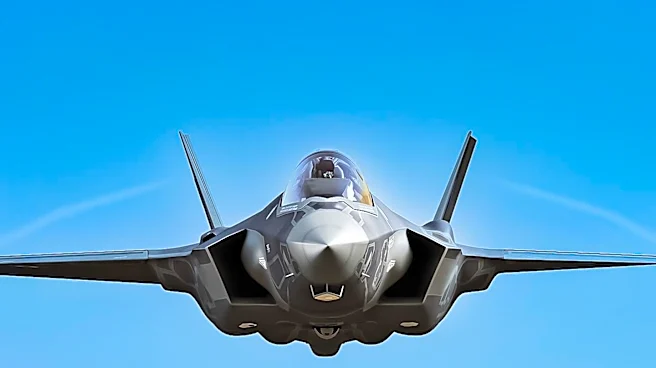
The Pentagon temporarily stopped accepting deliveries of F-35 fighter jets in September 2022 after discovering that a magnet within a Honeywell-built turbomachine used a cobalt-samarium alloy manufactured
in China. This finding represented a potential violation of defense sourcing regulations. Although officials determined there was no threat to the aircraft's safety or security, deliveries remained suspended until Under Secretary of Defense William LaPlante issued a national security waiver in October. Subsequently, contractors were required to switch suppliers for the alloy. Lockheed Martin indicated that the alloy originated from a fifth-tier supplier, highlighting the complexities of tracing material origins deep within the supply chain. This incident underscores the vulnerability of the U.S. defense industrial base to foreign-sourced critical materials, particularly rare earth elements like samarium, which are essential for high-performance magnets used in advanced military technology.
Why It's Important?
This incident highlights a significant vulnerability in the U.S. defense supply chain, particularly concerning critical minerals and rare earth elements. Samarium, a rare earth element, is crucial for samarium-cobalt magnets that maintain strength at high temperatures, making them indispensable for advanced military applications like the F-35. The U.S. Geological Survey's 2025 stress test identified samarium as the commodity whose supply disruption would cause the most economic damage to the U.S., estimated at nearly $4.5 billion, primarily impacting guided missile and space vehicle manufacturing, and search, detection, and navigation instrument manufacturing. China's dominant position in samarium production and its implementation of export licenses for samarium products in April 2025 demonstrate its leverage over global supply. The Pentagon's F-35 delivery halt illustrates how reliance on foreign sources for even small, inexpensive components can disrupt major defense programs and expose national security risks, emphasizing the need for a robust, non-Chinese supply chain for critical materials.
What's Next?
Efforts are underway to establish and strengthen a non-Chinese supply chain for samarium and other critical rare earth elements. Solvay, Less Common Metals, and Permag have formed an agreement to produce samarium oxide, convert it to metal, and use it in high-performance magnets in the United States, aiming for a steady supply for Permag for three to five years. USA Rare Earth has acquired Less Common Metals and invested in Carester, a French rare earth separation and magnet-recycling company. Solvay has also opened a new rare earth line, and MP Materials is developing a heavy rare earth separation plant in California that will process samarium. Lynas Rare Earths has reported samarium oxide production from its Malaysian plant, and the Defense Logistics Agency has contracted Terves to design a U.S. plant for converting samarium and gadolinium into metal. These initiatives aim to build domestic and allied capacity, though the current projects do not yet provide the assured wartime supply capacity the Pentagon requires. Future steps will likely involve long-term off-take contracts, reciprocal inventories, surge agreements, and advanced qualification processes to ensure a resilient industrial base.
Beyond the Headlines
The F-35 incident reveals a deeper systemic challenge in modern globalized supply chains: the difficulty of tracing the origin of materials, especially those from lower-tier suppliers. This 'fifth-tier supplier' issue highlights the opacity that can exist even for critical defense components, making it challenging for the U.S. to enforce sourcing regulations and ensure national security. The reliance on China for rare earth elements like samarium also raises geopolitical concerns, as China can use its control over these resources as a strategic tool. The U.S. government may need to consider more direct intervention, such as paying for assured production capacity, to incentivize the development of domestic and allied supply chains, particularly in small markets dominated by defense demand where commodity prices alone may not sustain necessary capacity. This situation underscores the ethical and strategic imperative for greater transparency and resilience in supply chains for critical technologies, moving beyond simple cost-efficiency to prioritize national security and industrial independence.