
What's Happening?
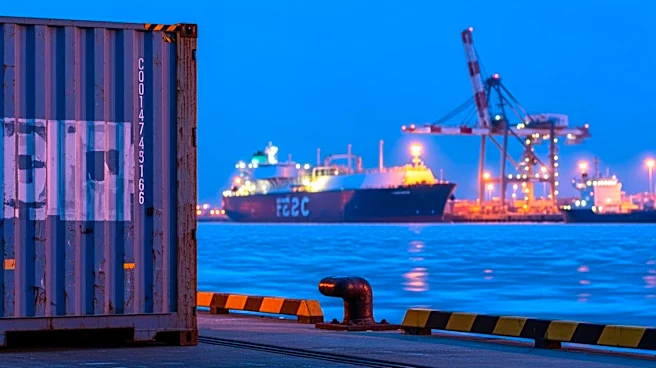
Russia's Yamal LNG project is facing logistical challenges as it plans to redirect exports from Europe to Asia by 2027. The European Union's upcoming ban on Russian LNG imports is prompting Moscow to shift
its focus to Asian markets. However, the existing Russian LNG fleet may struggle to meet the demands of longer Asian routes, which require more voyages and ice-class vessels. The Center for High North Logistics (CHNL) projects that the fleet's capacity will be significantly reduced, necessitating adjustments to the logistics scheme. Russia's shipbuilding sector faces difficulties due to sanctions, limiting the expansion of ice-class tonnage needed for efficient transshipment operations.
Why It's Important?
The logistical challenges faced by Russia in redirecting Yamal LNG exports highlight the complexities of global energy trade amidst geopolitical tensions. The shift to Asian markets could impact global LNG supply dynamics, affecting prices and availability for U.S. industries reliant on LNG imports. The situation underscores the importance of strategic planning and infrastructure development in maintaining energy security. The reliance on ice-class vessels and the need for additional tankers could drive innovation in shipbuilding and logistics, potentially influencing global shipping practices.
What's Next?
Russia may need to expand its ice-class fleet and enhance transshipment capacity to effectively redirect LNG exports to Asia. The development of new shipping routes and infrastructure could be necessary to accommodate the longer distances and challenging conditions. Stakeholders, including energy companies and governments, may need to collaborate on strategies to address these logistical challenges and ensure stable energy supplies. The situation could lead to increased competition in the Asian LNG market, influencing global energy trade patterns.
Beyond the Headlines
The logistical challenges faced by Russia could have broader implications for global energy security and trade. The shift to Asian markets may drive innovation in shipping and logistics, potentially leading to more sustainable and efficient practices. The situation also raises ethical considerations regarding the environmental impact of increased shipping activities and the need for responsible resource management.