





What's Happening?
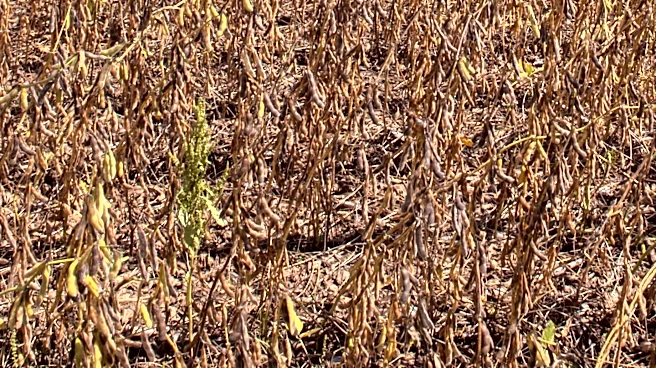
Soybean discoloration is being reported across an increasing number of areas in the U.S. Corn Belt, with higher prevalence than in recent years. This phenomenon is raising concerns about its causes and potential impacts on grain quality, classification,
and marketability. Mike Seyfert, CEO of the National Grain and Feed Association, noted that the discoloration appears to be 'hop scotching' across multiple states. While similar issues occurred in 2021 and 2022, affecting 3-5% of soybeans in specific regions, some areas of the Corn Belt this fall are seeing levels exceeding the 10% threshold. Seed coat and quality problems are being reported, prompting NGFA members and specialists from universities like Missouri and Ohio State to investigate the environmental factors, traits, and maturities contributing to the issue. Ohio State University has observed that Soybean Other Color (SBOC) is commonly seen in varieties containing the Enlist E3 trait package, though environmental conditions also play a role. Various soybean diseases can also cause discoloration, making visual diagnosis challenging. In 2023, the USDA removed SBOC as a grade-determining factor for yellow soybeans, but it remains a factor for exported soybeans.
Why It's Important?
The widespread soybean discoloration poses significant economic implications for U.S. farmers and the agricultural industry. If more than 10% of soybeans are affected by SBOC, they are classified as U.S. number two mixed soybeans instead of U.S. number two yellow soybeans, which can impact their market value, especially for export. This reclassification could lead to price discounts or even rejections from buyers, affecting farmers' profitability and potentially disrupting supply chains. The uncertainty surrounding the causes—whether environmental, genetic, or disease-related—creates challenges for farmers in managing their crops and making planting decisions for future seasons. For the U.S. export market, maintaining high-quality standards is crucial for global competitiveness. A perceived decline in soybean quality could affect international demand and trade relationships. Furthermore, the need for extensive research to identify the exact causes and develop mitigation strategies highlights the ongoing challenges faced by agricultural science in adapting to changing environmental conditions and crop traits.
What's Next?
Farmers with concerns about soybean quality are advised to consult with their local grain elevators or cooperatives. Researchers and agricultural specialists across multiple states will continue their efforts to pinpoint the exact causes of the discoloration, differentiating between environmental factors, specific trait packages like Enlist E3, and various soybean diseases. The findings from these investigations will be crucial for developing effective management strategies and potentially influencing future seed development. The agricultural industry will closely monitor how grain elevators and processors handle the discolored soybeans, particularly regarding discounts or rejections. The ongoing classification of SBOC as a factor for exported soybeans means that U.S. trade officials and agricultural bodies will need to address potential impacts on international markets and ensure clear communication with trading partners. Long-term, this issue could drive further research into resilient soybean varieties and sustainable farming practices to mitigate such quality concerns.
Beyond the Headlines
The issue of soybean discoloration extends beyond immediate economic losses, touching upon the complex interplay between agricultural technology, environmental resilience, and global trade dynamics. The observation that SBOC is common in varieties with the Enlist E3 trait package raises questions about the unintended consequences of genetically modified crops and the need for comprehensive evaluation of new traits. This situation highlights the delicate balance between maximizing yield and ensuring crop quality in the face of evolving environmental stressors. Furthermore, the differing classification standards for domestic versus export markets underscore the complexities of international trade regulations and the pressure on U.S. agriculture to meet diverse global demands. This event could fuel broader discussions about agricultural sustainability, the role of biotechnology in food production, and the need for robust research and extension services to support farmers in adapting to new challenges posed by climate change and evolving crop pathogens. It also emphasizes the importance of transparent communication and collaboration among farmers, researchers, industry, and government agencies to safeguard the future of U.S. agriculture.