








What's Happening?
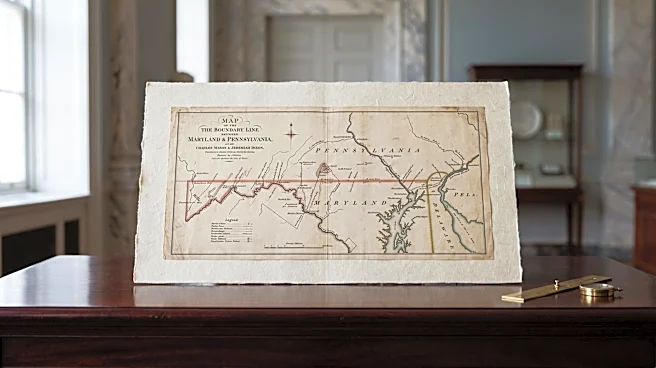
A hand-drawn survey of the Mason-Dixon Line, historically significant for delineating the boundary between free and slave states in the U.S., is slated for auction. This document, remounted on Japanese rice paper, will be sold in a livestreamed auction on Thursday.
Brunk Auctions in Asheville, North Carolina, estimates the map could command a price between $800,000 and $1.2 million. The survey was originally conducted by Charles Mason and Jeremiah Dixon to resolve a border dispute between the colonies of Maryland and Pennsylvania. However, its historical importance escalated when it was later adopted in the 1820 Missouri Compromise, establishing the geographical limits of slavery and becoming a symbolic division that preceded the Civil War. The map remained in the family of attorney Benjamin Chew, who represented William Penn's descendants, until 1982 when it was acquired by publisher Malcolm S. Forbes for $360,000, then a record price for an American map. It changed hands again in 2002.
Why It's Important?
This auction represents a rare opportunity to acquire a tangible piece of American history that profoundly shaped the nation's development and identity. The Mason-Dixon Line, as depicted in this original survey, became a critical demarcation point in the national debate over slavery, ultimately contributing to the tensions that led to the Civil War. Its sale highlights the enduring value and historical resonance of such artifacts, offering a direct link to pivotal moments in U.S. history. The potential high sale price underscores the market's recognition of its unique historical significance. Furthermore, the fact that the Library of Congress, which previously sought to acquire the map, is not in a position to bid due to budget constraints, raises questions about the preservation of national heritage in public institutions versus private collections.
What's Next?
The auction of the Mason-Dixon Line survey will take place on Thursday in a livestreamed event. The anonymous seller stands to gain a substantial sum, potentially up to $1.2 million, from the sale of this historic document. The outcome of the auction will determine whether this significant piece of American history enters another private collection or, potentially, a public institution if a private buyer chooses to donate it. The situation also brings attention to the financial challenges faced by public institutions like the Library of Congress in acquiring and preserving historically important artifacts, suggesting a continued reliance on private collectors and philanthropists for the safeguarding of such items.
Beyond the Headlines
The 'Dixie' map transcends its function as a mere geographical boundary; it embodies the deep-seated ideological and social divisions that defined early American history. The term 'Dixie' itself, though its origin is debated, is popularly linked to Dixon, further cementing the line's cultural impact. This map serves as a powerful reminder of the complex and often painful process of nation-building, where territorial disputes intertwined with moral questions of human rights. Its journey from a colonial border agreement to a symbol of national schism reflects how historical documents can evolve in meaning and significance over time. The auction of such an item also sparks broader discussions about the ownership of historical artifacts, the role of private wealth in preserving public heritage, and the accessibility of these crucial records for scholarly research and public education.