
What's Happening?
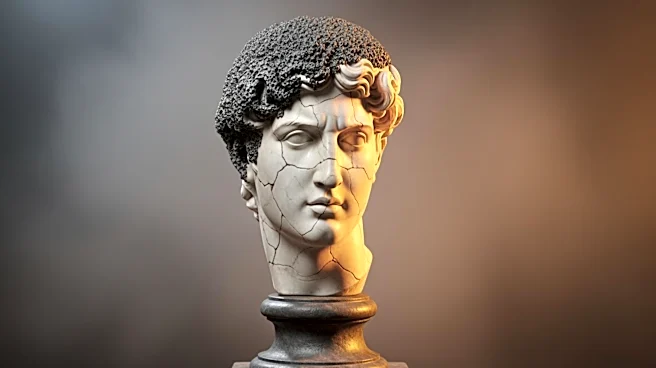
Researchers at the Pompeii Archaeological Park have utilized artificial intelligence to create a digital portrait of a man who perished during the eruption of Mount Vesuvius in AD 79. The reconstruction,
based on skeletal remains found outside the ancient city, depicts the man using a terracotta mortar as a shield against falling debris. This project, a collaboration with the University of Padua, aims to make archaeological research more accessible and engaging to the public. The digital portrait provides insight into the final moments of the victim and the broader context of life in Pompeii before the disaster.
Why It's Important?
This innovative use of AI in archaeology highlights the potential for technology to enhance our understanding of historical events and human experiences. By creating a more vivid and relatable depiction of ancient life, the project can engage a wider audience and foster a deeper appreciation for historical studies. It also underscores the importance of preserving archaeological sites and artifacts, as they offer invaluable insights into past civilizations and their cultures.