
What's Happening?
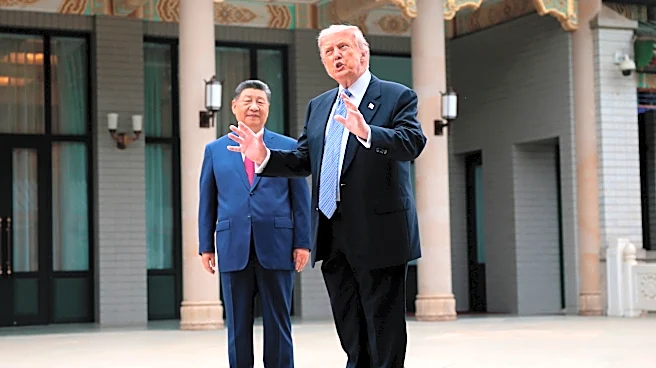
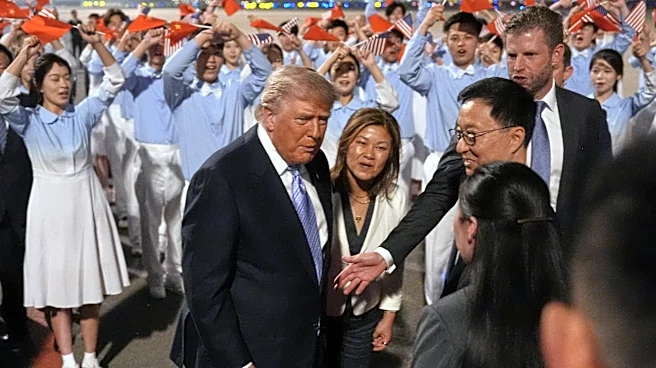
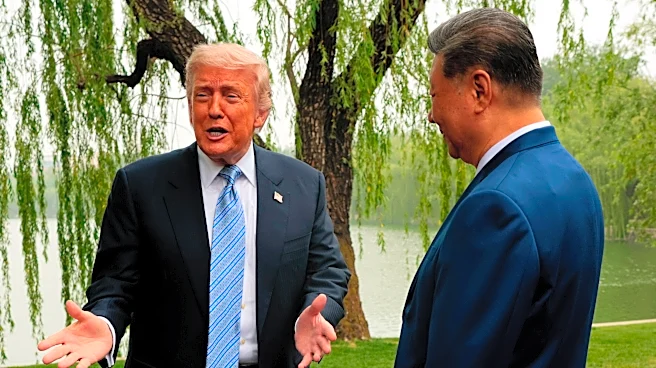
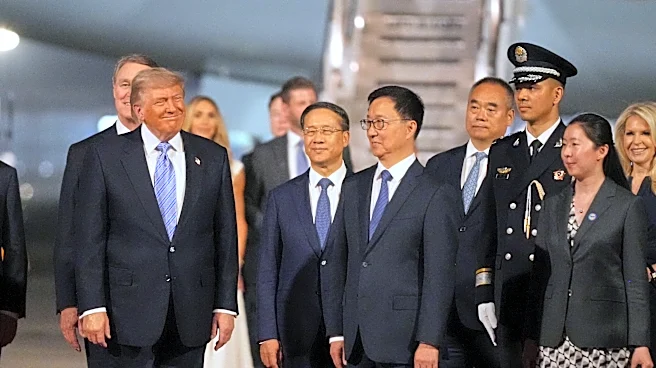
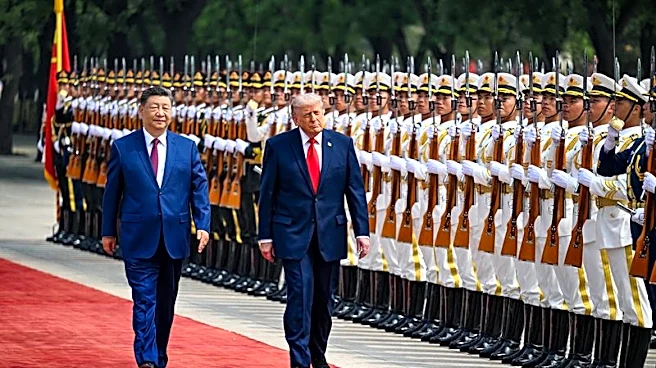
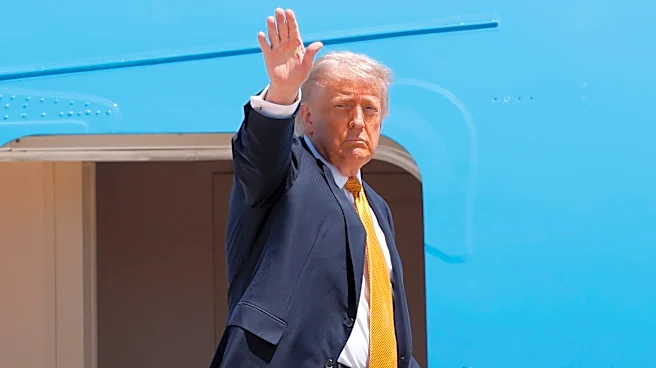
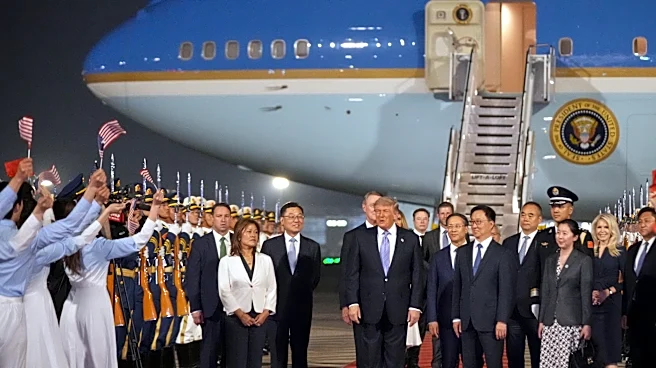
President Trump and a delegation of U.S. officials concluded a two-day visit to Beijing, engaging in high-level discussions with Chinese President Xi Jinping. Upon departure, travelers on Air Force One,
including White House staffers and reporters, were instructed to dispose of various items acquired during the trip. These items included burner phones, credential badges, and lapel pins issued by China. The directive was reportedly due to security concerns, as China is known for its advanced intelligence and espionage capabilities. The decision underscores the ongoing tension between the U.S. and China, despite the seemingly cordial nature of the summit.
Why It's Important?
The directive to discard items highlights the persistent security concerns the U.S. faces in its dealings with China. The move reflects the broader geopolitical tensions and the U.S.'s cautious approach to potential espionage threats. This action could impact diplomatic relations and underscores the need for vigilance in international engagements. The incident also raises awareness about the security protocols necessary when dealing with nations perceived as adversaries, potentially influencing future diplomatic and business interactions.
What's Next?
The U.S. may continue to enforce stringent security measures in future international engagements, particularly with countries like China. This could lead to increased scrutiny of diplomatic gifts and communications devices. The incident may prompt discussions within the U.S. government about enhancing security protocols for international travel and engagements. Additionally, it could influence how other countries perceive and interact with the U.S., potentially affecting diplomatic relations and international cooperation.