






What's Happening?
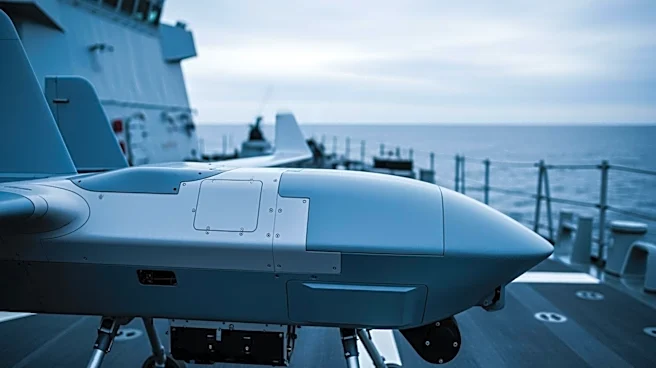
The U.S. military has launched new strikes against Iran, targeting a ground control station in Bandar Abbas and shooting down four Iranian drones. These actions were described as defensive, aimed at maintaining the ceasefire and protecting U.S. forces
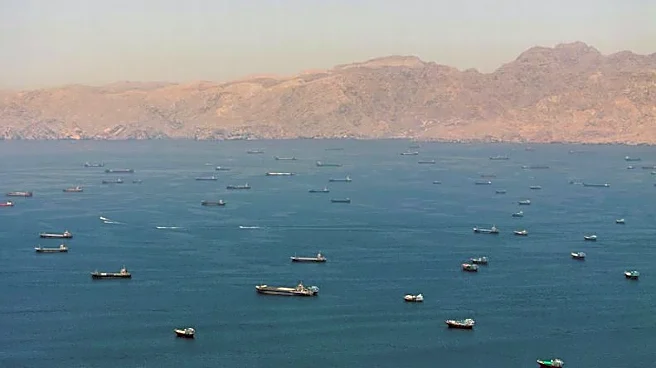
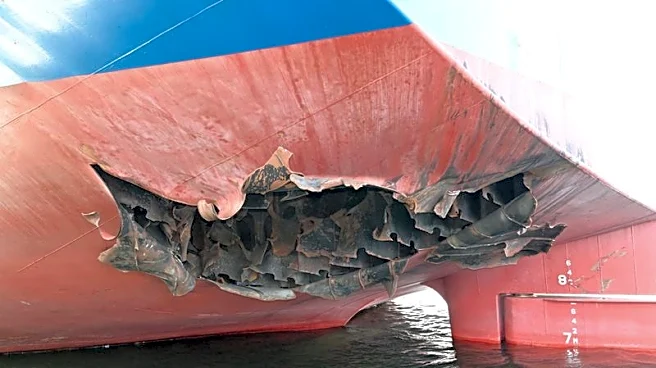
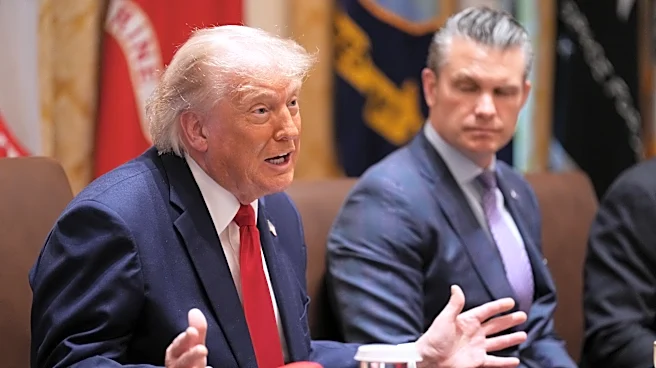
and commercial shipping in the Strait of Hormuz. The strikes follow previous U.S. actions targeting missile launch sites and Iranian vessels attempting to lay mines. President Trump has indicated that negotiations with Iran are ongoing, with the potential for a deal to end the conflict, but emphasized that any agreement must be favorable to the U.S.
Why It's Important?
The U.S. strikes underscore the ongoing tensions in the Middle East, particularly around the strategic Strait of Hormuz, a vital route for global oil shipments. The actions reflect the U.S. commitment to safeguarding its interests and maintaining regional stability. The situation also highlights the challenges in negotiating a peace deal with Iran, as both sides continue to engage in military actions. The potential impact on global oil markets and economic stability is significant, with any disruption in the strait likely to affect oil prices and supply chains worldwide.
What's Next?
The U.S. and Iran may continue to engage in military posturing, with the potential for further strikes if threats persist. Diplomatic efforts may be pursued to de-escalate tensions and reach a comprehensive peace agreement. The international community will be monitoring the situation closely, particularly any developments that could impact global oil markets. The U.S. may also seek to strengthen alliances in the region to counter Iranian influence and ensure the security of shipping lanes.