
What's Happening?
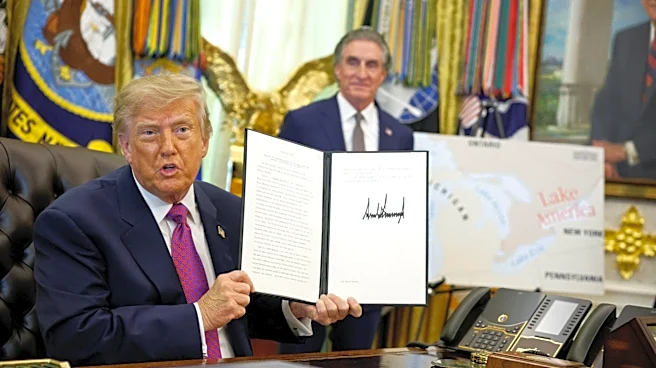
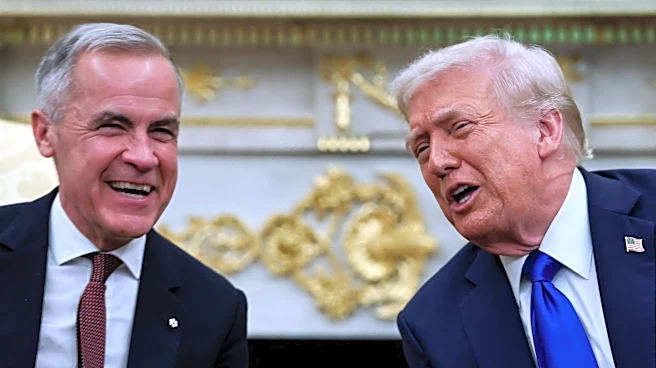
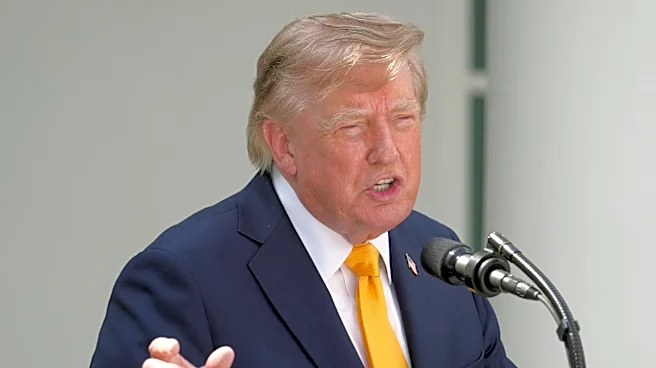
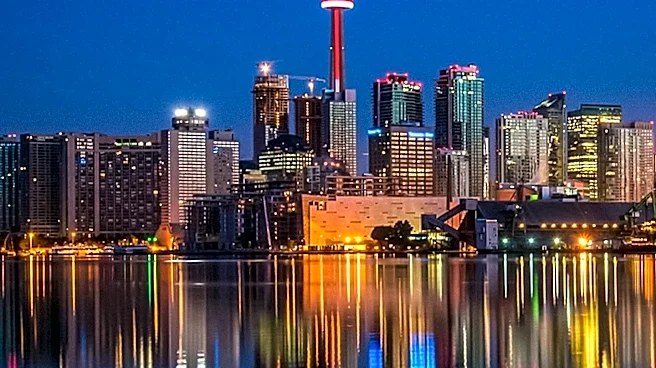
President Trump has signed an executive order officially renaming Lake Ontario to 'Lake America' within the United States, escalating a trade war with Canada. This move follows the U.S. imposition of 50%
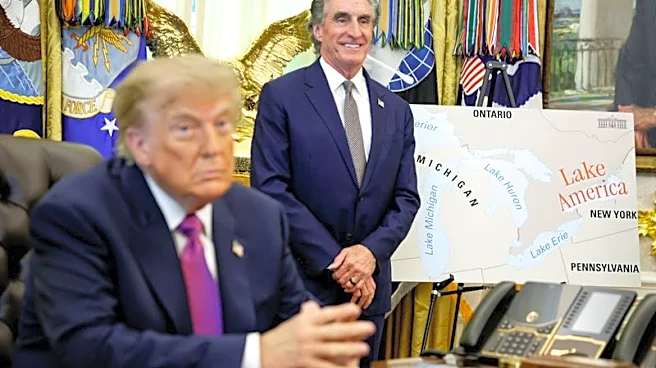
tariffs on $20 billion worth of Canadian goods, to which Canada retaliated with tariffs on an equivalent amount of American products. President Trump, who has previously suggested absorbing Canada as the 51st state, signed the order at the Resolute Desk with a map behind him displaying 'Lake America' over Lake Ontario. He stated that all necessary papers and documents were filed, making the change effective immediately, though the executive order specifies a 30-day window for changes. Canadian Prime Minister Mark Carney and Nova Scotia Premier Tim Houston have rejected the renaming, emphasizing the lake's Indigenous roots and historical name.
Why It's Important?
This action by President Trump is significant as it represents a symbolic, yet provocative, escalation in the ongoing trade dispute and diplomatic tensions between the United States and Canada. While the renaming only applies within the U.S. geographic naming service and does not compel Canada to adopt the new name, it signals a hardening stance in U.S. foreign policy towards its northern neighbor. The imposition of tariffs and the retaliatory measures by Canada have direct economic consequences for industries in both countries, affecting sectors such as steel, dairy, appliances, and farm equipment. This move could further strain diplomatic relations, potentially impacting future trade negotiations, cross-border cooperation, and the overall stability of the North American economic partnership. It also highlights the President's willingness to use unconventional tactics in international relations.
What's Next?
The renaming of Lake Ontario to 'Lake America' is likely to provoke further diplomatic responses from Canada, though the extent of these reactions remains to be seen. The U.S. Interior Department is tasked with updating the lake's name in the U.S. geographic naming service within 30 days, as per the executive order. Economically, the trade war is expected to continue, with potential for further tariffs or retaliatory measures from either side, impacting businesses and consumers in both countries. The symbolic nature of the renaming may also influence public opinion and political discourse in both the U.S. and Canada, potentially leading to increased nationalistic sentiments. Future negotiations between the two countries will likely be complicated by these actions, requiring significant diplomatic effort to de-escalate tensions and resolve trade disputes.
Beyond the Headlines
Beyond the immediate political and economic ramifications, President Trump's renaming of Lake Ontario raises deeper questions about national sovereignty, cultural heritage, and the use of symbolic gestures in international diplomacy. The lake's original name, 'Ontario,' derives from the Huron Indigenous people's word 'oniatarí:io,' meaning 'lake of shining waters,' and holds significant historical and cultural value for Indigenous communities and Canadians. The unilateral renaming by the U.S. could be perceived as disrespectful to this heritage and a disregard for established international norms regarding shared geographical features. This action also underscores a broader trend in which national leaders employ symbolic acts to assert dominance or express dissatisfaction, potentially setting a precedent for similar actions in other international disputes. The long-term impact on the U.S.-Canada relationship, traditionally one of close alliance, could be profound, fostering resentment and distrust that extends beyond the current administration.