



What's Happening?
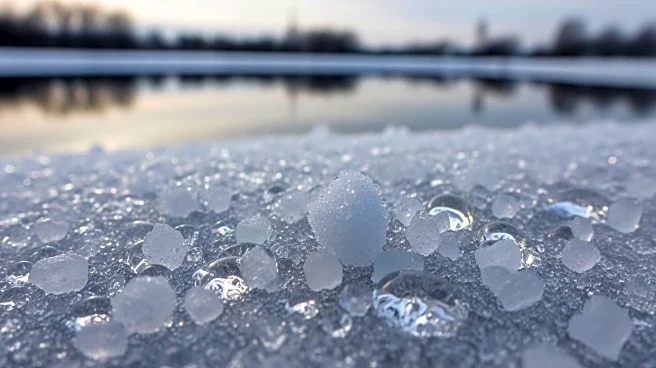
As snow continues to melt across the Philadelphia region, there is growing concern about the potential contamination of the water supply due to rock salt. The salt, which is commonly used to prevent slipping on icy surfaces, can dissolve into the melting
snow and eventually make its way into local water systems. This issue has been highlighted by recent research indicating that the salt could pose a risk to water quality. The situation is being closely monitored as the region experiences fluctuating weather conditions that contribute to the melting process.
Why It's Important?
The potential contamination of water supplies with rock salt is a significant environmental and public health concern. If the salt infiltrates the water system, it could lead to increased salinity levels, which may affect the taste and safety of drinking water. This situation underscores the need for effective management of de-icing materials and highlights the broader challenges of maintaining water quality in urban areas during winter months. The issue also raises questions about the sustainability of current snow and ice management practices and the need for alternative solutions that minimize environmental impact.
What's Next?
Local authorities and environmental agencies are likely to increase monitoring efforts to assess the extent of salt contamination in the water supply. There may also be discussions about implementing more sustainable de-icing methods or improving existing infrastructure to better manage runoff. Public awareness campaigns could be initiated to inform residents about the potential risks and encourage responsible use of de-icing products. Additionally, policymakers might consider revising regulations related to the use of rock salt and other chemicals in snow management.