




What's Happening?
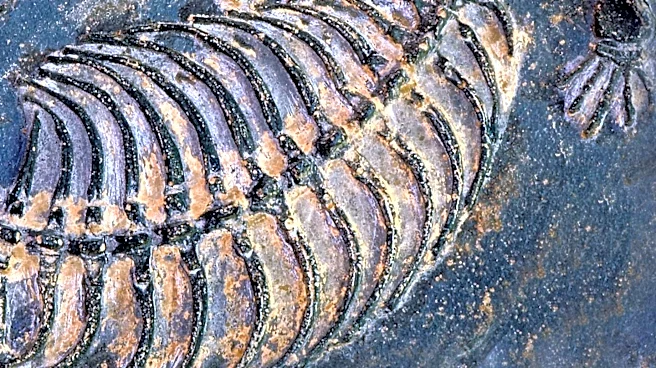
A new study reveals that ancient underwater canyons in South Australia played a crucial role in preserving some of the world's richest Ediacaran fossils. These canyons, dating back to the Ediacaran Period (approximately 635 million to 538.8 million years
ago), were formed by powerful water flows and underwater erosion. Lead author Karol Faehnrich, a geologist at Adelaide University, explains that a significant decline in sea levels initially led to the formation of these colossal canyons, some plunging to depths of 280 meters and stretching over 6 kilometers. Subsequently, as sea levels rose again, these canyons were rapidly flooded and filled with sediment. This unique geological process created the ideal conditions for the exceptional preservation of the soft-bodied Ediacaran biota, which are typically difficult to fossilize. The research focuses on rock formations in the Flinders Ranges, a mountainous region in South Australia known for its diverse and well-preserved Ediacaran fossils.
Why It's Important?
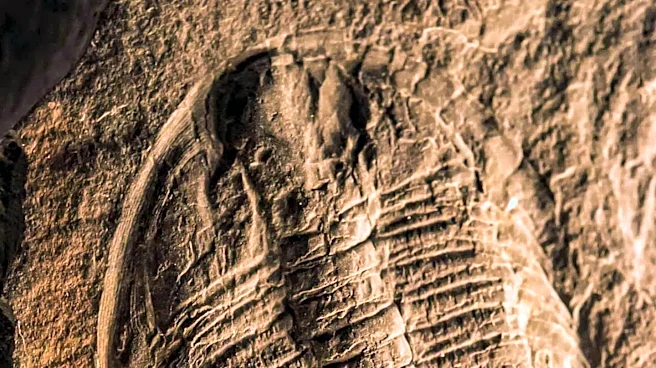
This discovery is significant for understanding the early evolution of life on Earth and the geological processes that allowed for the preservation of ancient organisms. The Ediacaran biota represents some of Earth's first complex animals, and their fossil record provides critical insights into a pivotal period before the Cambrian explosion. The exceptional preservation found in these South Australian canyons offers a rare window into the morphology and diversity of these pioneering creatures, many of which looked unlike anything alive today. Understanding the specific conditions that led to their fossilization helps paleontologists piece together the environmental factors that influenced early life forms and their eventual disappearance in a mass extinction event. This research contributes to the broader scientific effort to comprehend the timeline of life's development and the interplay between geological and biological evolution.
What's Next?
The findings, published in Earth and Planetary Science Letters, are expected to spur further research into the Ediacaran Period and the specific geological mechanisms of fossil preservation. Scientists may now focus on identifying similar ancient underwater canyon systems in other regions of the world that could potentially harbor undiscovered Ediacaran fossils. The insights gained from this study could also inform future paleontological expeditions and the development of new techniques for locating and analyzing ancient fossil sites. Continued investigation into the sediment depositions and the characteristics of these ancient canyons will likely provide more detailed information about the powerful water flows and erosional processes that shaped these environments and contributed to the unique fossil record.
Beyond the Headlines
The study highlights the intricate relationship between geological events and the preservation of biological history. The 'quirks of Ediacaran landscapes, coasts, and climates' were not merely passive backdrops but active participants in shaping the fossil record. This underscores the idea that the Earth's dynamic geological processes can create rare 'windows of exceptional preservation,' allowing us to glimpse life forms that would otherwise be lost to time. The delicate impressions of soft-bodied organisms, which are usually poorly preserved, serve as a reminder of the fragility of the fossil record and the specific conditions required for such preservation. This research also implicitly emphasizes the importance of interdisciplinary studies, combining geology and biology, to unravel the mysteries of Earth's ancient past and the evolution of life.