



What's Happening?
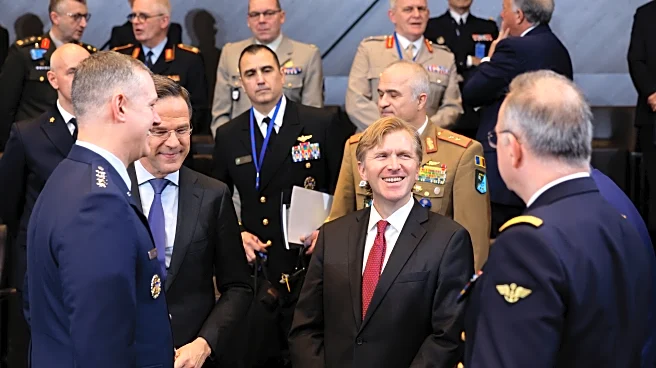
European Union leaders are meeting in Belgium to address challenges posed by U.S. President Donald Trump, economic tactics from China, and hybrid threats from Russia. The meeting, held in a historic Belgian castle, aims to reshape Europe's diplomatic
and trade strategies. Belgian Prime Minister Bart De Wever emphasized the need for change, while French President Emmanuel Macron and German Chancellor Friedrich Merz highlighted the urgency for Europe to take action. The leaders are discussing strategies to enhance Europe's competitiveness and reduce dependency on external powers, with a focus on deregulation and strategic autonomy.
Why It's Important?
The EU's response to pressures from major global powers is critical for its future economic and political stability. The meeting reflects the bloc's efforts to assert its independence and strengthen its position on the global stage. By addressing these challenges, the EU aims to protect its industries and maintain a competitive edge in the global market. The discussions could lead to significant policy shifts, impacting trade relations, economic growth, and the EU's role in international affairs. The outcome of this meeting could influence the EU's ability to navigate complex geopolitical dynamics and maintain its influence.
What's Next?
The EU leaders' meeting is expected to shape the agenda for an upcoming summit in March. The discussions may lead to new financial instruments and trade policies to protect the EU's interests. Leaders are likely to continue debating the balance between strategic autonomy and maintaining strong ties with global partners. The EU's approach to these challenges will be closely watched by international stakeholders, as it could set the tone for future diplomatic and economic engagements. The bloc's ability to implement effective strategies will be crucial in addressing the pressures from the U.S., China, and Russia.