



What's Happening?
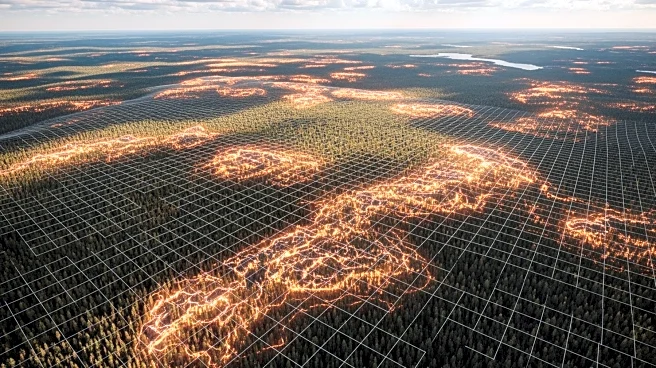
Researchers at Northern Arizona University have created the Treatment and Wildfire Interagency Geodatabase (TWIG) to analyze the impact of fuel treatments on wildfire risk across the United States. The database compiles decades of data on fuel treatments and wildfires,
integrating records from multiple federal systems. This tool aims to support land management decisions by evaluating the effectiveness of treatments like forest thinning and prescribed burns in reducing wildfire risk. The initiative is a collaborative effort with other Southwest Ecological Restoration Institutes.
Why It's Important?
The development of TWIG represents a significant advancement in wildfire management, providing a comprehensive resource for understanding the impact of fuel treatments. As wildfires become more frequent and severe, tools like TWIG are essential for developing effective strategies to mitigate risks and protect communities. By making data accessible, the geodatabase facilitates collaboration among researchers, policymakers, and land managers, potentially leading to more informed and effective wildfire prevention and response efforts.
Beyond the Headlines
The creation of TWIG highlights the importance of data-driven approaches in addressing environmental challenges. By enabling a deeper understanding of the relationship between fuel treatments and wildfire behavior, the geodatabase could inform future policies and practices in land management. The initiative also underscores the role of academic institutions in contributing to public safety and environmental sustainability through research and innovation.