



What's Happening?
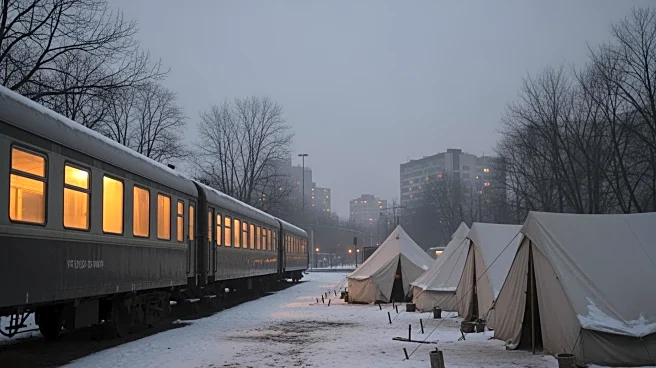
Residents of Kyiv, Ukraine, are enduring severe cold as Russian strikes target the city's energy infrastructure, leading to widespread power outages. The attacks, described by Ukraine as 'energy terrorism,' have left many without heating during freezing
temperatures. Elderly individuals are seeking refuge in heated train carriages, while families are using heated tents for meals. The situation is particularly dire for those living in apartment blocks with electric heating, as power is often only available at night. The Ukrainian government has set up 'invincibility points' where residents can access heating and electricity. The ongoing conflict, which began in February 2022, has seen Russia targeting energy infrastructure, claiming these are military-related sites. However, Kyiv argues these strikes are war crimes aimed at demoralizing civilians.
Why It's Important?
The attacks on Kyiv's energy infrastructure highlight the humanitarian crisis faced by civilians in conflict zones. The lack of heating and electricity during winter poses severe health risks, with over 1,000 Ukrainians hospitalized for frostbite and hypothermia since late December. This situation underscores the vulnerability of civilian populations in war-torn areas and the urgent need for international humanitarian assistance. The strikes also raise questions about the legality of targeting civilian infrastructure under international law, with the UN human rights chief condemning the attacks as violations of warfare rules. The ongoing conflict continues to strain Ukraine's resources and infrastructure, impacting the daily lives of its citizens and challenging the country's resilience.
What's Next?
As the conflict persists, Kyiv's authorities warn that conditions could worsen if cold temperatures continue. The Ukrainian government and international organizations may need to increase humanitarian aid to support affected residents. The situation could prompt further international condemnation and calls for Russia to cease targeting civilian infrastructure. Additionally, the Ukrainian government might seek to strengthen its air defenses to protect critical infrastructure. The ongoing humanitarian crisis could also influence diplomatic efforts to resolve the conflict, as the international community seeks to address the needs of civilians caught in the crossfire.
Beyond the Headlines
The attacks on Kyiv's energy infrastructure highlight the broader implications of warfare on civilian populations. The targeting of essential services like heating and electricity not only affects immediate survival but also has long-term impacts on public health, economic stability, and social cohesion. The situation in Kyiv serves as a stark reminder of the need for robust international mechanisms to protect civilians in conflict zones and hold accountable those who violate international humanitarian law. The resilience of Kyiv's residents, as they adapt to harsh conditions, also reflects the broader human capacity to endure and innovate in the face of adversity.