





What's Happening?
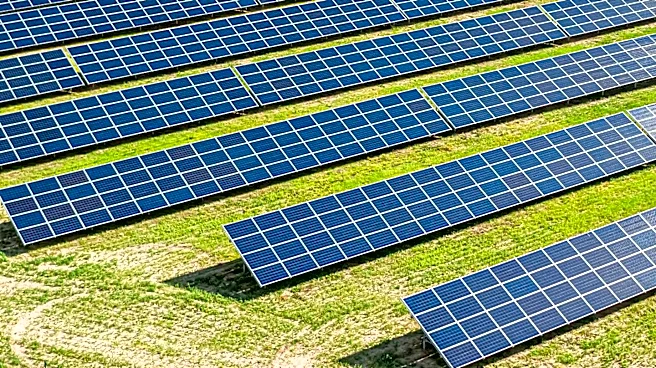
The California Legislature has passed two bills, AB 1813 and SB 868, aimed at significantly increasing access to small-scale solar energy for renters and others who cannot install traditional rooftop solar. AB 1813, the Community Renewable Energy Program
Act, is a third attempt to mandate the California Public Utilities Commission (CPUC) to develop a more robust community solar program, allowing residents to subscribe to local solar arrays and receive discounted electricity bills. SB 868 legalizes 'balcony solar' systems, enabling individuals to install small panels on patios or fences and plug them directly into outlets to lower bills without utility permissions. These legislative efforts follow a period of decline in rooftop solar installations in California after the CPUC reduced incentives in 2022, a move supported by utility companies.
Why It's Important?
These bills represent a critical step towards democratizing solar energy access in California, particularly for renters and low-income households who have historically been excluded from the benefits of rooftop solar. If signed into law, AB 1813 could establish the nation's largest community solar and storage program, potentially providing clean power to over 2.2 million Californians and generating $6.5 billion in ratepayer savings by reducing reliance on expensive gas generation. SB 868 offers a direct, accessible solution for individuals to reduce their energy costs. The strong opposition from major investor-owned utilities, who argue these bills could shift costs to non-participating customers, highlights the ongoing tension between expanding renewable energy access and maintaining existing utility business models. This legislative push could set a precedent for other states grappling with similar challenges in their clean energy transitions.
What's Next?
Both bills now await Governor Gavin Newsom's signature. While SB 868, the balcony solar bill, is expected to go into effect once systems are certified as safe for U.S. use, AB 1813 faces a potentially tougher path due to the CPUC's previous opposition to similar community solar programs. If signed, AB 1813 would direct regulators to value community solar and storage using the CPUC’s own Avoided Cost Calculator and require paired battery storage. The Public Advocates Office estimates AB 1813 could shift about $1.5 billion annually onto non-participating customers, a claim disputed by Assemblymember Chris Ward, the bill's author, who cites studies indicating overall ratepayer benefits. The outcome will significantly influence California's renewable energy landscape and its ability to meet climate goals while ensuring equitable access to clean energy.
Beyond the Headlines
The debate surrounding AB 1813 and SB 868 extends beyond mere energy policy; it touches upon fundamental questions of energy equity and consumer empowerment. The push for community solar and balcony solar reflects a desire to break away from the traditional 'monopoly utility model' and allow individuals greater control over their energy consumption and costs. The utilities' arguments about cost shifting raise important questions about how the financial burdens and benefits of grid modernization and renewable energy integration are distributed among ratepayers. The legislative efforts highlight a broader societal shift towards decentralized energy production and the challenges of adapting existing regulatory and economic frameworks to accommodate these changes. The success of these bills could inspire similar movements in other states, fostering a more inclusive and resilient energy future.