







What's Happening?
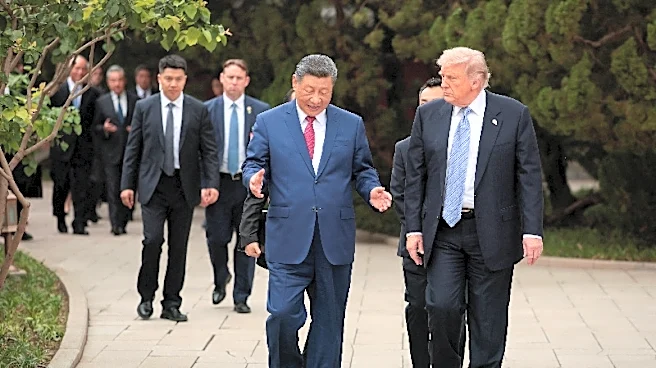
During a summit with President Donald Trump, Chinese President Xi Jinping expressed opposition to Iran's potential militarization of the Strait of Hormuz. This stance highlights a fracture in the perceived alliance between China, Russia, and Iran. The
summit's outcome suggests that China's strategic interests may not align with those of its partners, particularly when it comes to regional stability and trade routes. The development raises questions about the durability of the so-called 'axis' of China, Russia, and Iran, as China's economic priorities may lead to a reevaluation of its partnerships.
Why It's Important?
China's position on Iran could signal a shift in its foreign policy, prioritizing economic stability over alliances with countries that may disrupt global trade. This development could have significant implications for Russia, which relies heavily on its partnership with China for economic and strategic support. The potential realignment of China's alliances may affect global geopolitical dynamics, particularly in regions where Chinese and Russian interests intersect. The situation underscores the complexity of international relations and the challenges of maintaining alliances in a rapidly changing global landscape.
What's Next?
The U.S. may seek to leverage this development to further isolate Iran and potentially weaken the China-Russia-Iran axis. Diplomatic efforts could focus on encouraging China to distance itself from Russia, particularly in areas where their interests diverge. The situation may also prompt Russia to reassess its foreign policy strategy and explore new alliances to counterbalance China's growing influence. Monitoring China's actions in the Strait of Hormuz and its broader regional strategy will be crucial in understanding the future of its international relationships.