






What's Happening?
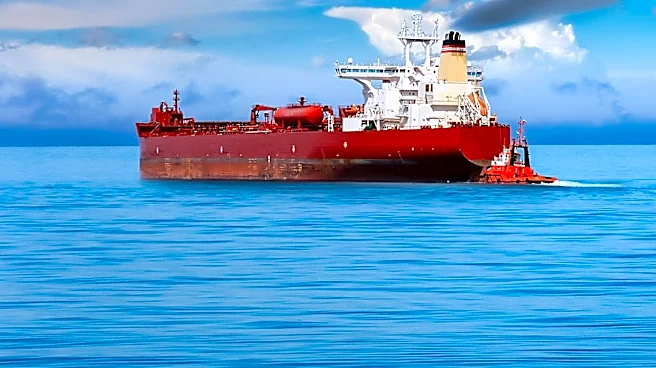
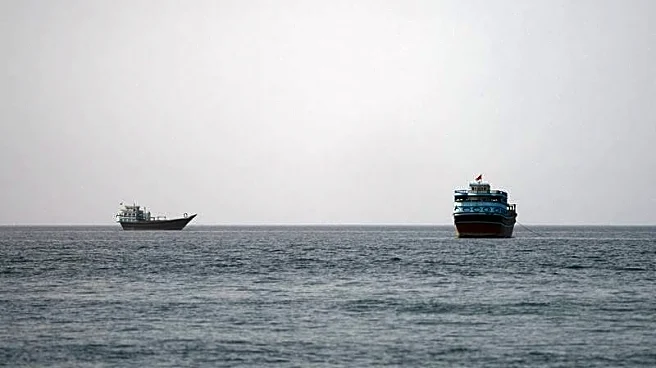
Oil transfers between tankers in the Gulf of Oman have significantly slowed following a series of attacks on vessels by Iranian forces. These ship-to-ship transfers have been crucial for moving oil out of the Gulf despite threats to commercial vessels navigating
the Strait of Hormuz. The U.S. military has been assisting in these operations to maintain the flow of oil, using drones and helicopters to guide tankers. However, recent satellite imagery indicates a reduction in these activities, with only a few transfers occurring in recent days. The number of supertankers passing through the Strait of Hormuz has also decreased, dropping to an average of two per day from five the previous week.
Why It's Important?
The slowdown in oil transfer activities in the Gulf of Oman highlights the ongoing geopolitical tensions affecting global oil supply chains. The Strait of Hormuz is a critical chokepoint for the world's oil supply, and disruptions here can have significant implications for global energy markets. The U.S. has been actively involved in ensuring the continued flow of oil, but the recent attacks have raised safety concerns among shipping companies. This situation underscores the vulnerability of global oil supplies to regional conflicts and the potential for increased volatility in oil prices, which can impact economies worldwide.
What's Next?
The ongoing conflict and attacks in the region suggest that further disruptions to oil supplies are possible. The U.S. is likely to continue its efforts to secure oil shipments through the Strait of Hormuz, but shipping companies may seek alternative routes or methods to mitigate risks. The international community may also increase diplomatic efforts to de-escalate tensions and ensure the stability of global oil markets. Monitoring the situation closely will be crucial for stakeholders in the energy sector.