





What's Happening?
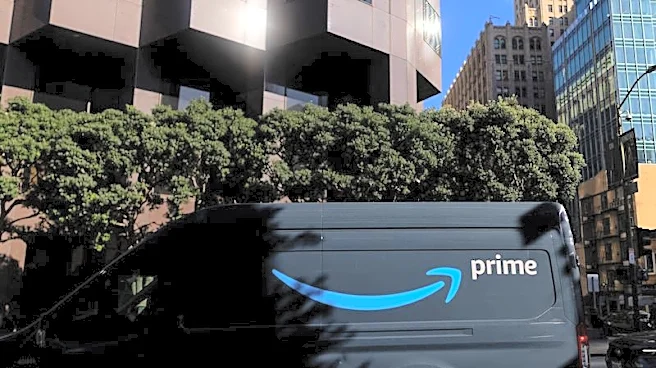
Cashierless payment systems, once considered futuristic, are now a common feature in many U.S. cities, fundamentally altering the retail experience. The shift began notably with Amazon's cashier-free Go store opening in Seattle in January 2018, where
cameras tracked purchases and billed customers automatically upon exit. This technology, initially perceived as science fiction, has paved the way for widespread adoption of contact-free payments, app-based ordering, and automated service desks. These conveniences are gradually reshaping daily urban life, particularly for younger generations who are growing up with these automated interactions as the norm. The integration of AI and automation into city services is driven by the promise of efficiency, speed, and reduced waste, making transactions quicker and often more seamless. This evolution signifies a broader trend towards the mechanization of city life, where human-to-human interactions in commercial settings are increasingly minimized.
Why It's Important?
The widespread adoption of cashierless payments and automated services carries significant implications for urban society and the economy. Economically, these systems can reduce operational costs for businesses by minimizing the need for human staff, potentially leading to increased profitability and efficiency. However, this also raises concerns about job displacement in the retail sector, impacting employment opportunities for cashiers and customer service roles. Socially, the decline in face-to-face interactions in everyday transactions contributes to a broader trend of reduced social connection. As cities become more optimized for speed and convenience, the incidental social exchanges that once characterized local shops and services diminish. This shift can affect community cohesion and the sense of belonging, as informal interactions with neighbors and shopkeepers become less frequent. The convenience offered by these technologies is undeniable, but the long-term societal cost in terms of human connection remains a critical consideration.
What's Next?
The trajectory for cashierless payments and automated urban services points towards continued expansion and integration. As technology advances, these systems are likely to become even more sophisticated, potentially incorporating advanced AI for personalized shopping experiences and predictive inventory management. Businesses will likely continue to invest in these technologies to enhance efficiency and meet consumer demand for quick, seamless transactions. However, there may also be growing discussions and potential policy responses regarding the social impact of this automation. Cities and policymakers might explore ways to balance technological advancement with the preservation of human interaction and community spaces. This could involve initiatives to support local businesses that prioritize human connection or regulations that ensure a human option remains available for essential services. Public sentiment, which has shown increasing concern about the role of AI in daily life, could also influence the pace and direction of future adoption.
Beyond the Headlines
Beyond the immediate convenience and economic efficiencies, the rise of cashierless payments touches upon deeper ethical and cultural dimensions. The increasing reliance on automated systems for everyday tasks contributes to a 'shifting baseline syndrome,' where each generation perceives the current level of automation as normal, potentially losing awareness of what has been lost in terms of human interaction. This gradual erosion of incidental social contact can have profound effects on mental well-being and social capital, as the small, unplanned encounters that build trust and community become rarer. There are also privacy implications, as these systems often rely on extensive data collection through cameras and sensors, raising questions about surveillance and data security. Culturally, the shift reflects a broader societal embrace of efficiency over human connection, prompting a re-evaluation of what constitutes a 'human-centered' city. The challenge lies in designing urban environments and technologies that leverage AI for efficiency without inadvertently diminishing the rich tapestry of human experience and interaction that defines vibrant city life.