






What's Happening?
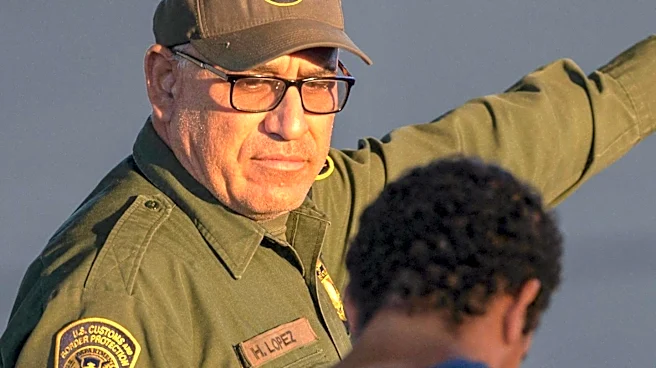
The state of Minnesota has filed a lawsuit against Texas Governor Greg Abbott in federal court, seeking to compel him to extradite ICE agent Christian Castro. Castro faces multiple felony charges in Minneapolis, including second-degree assault and falsely
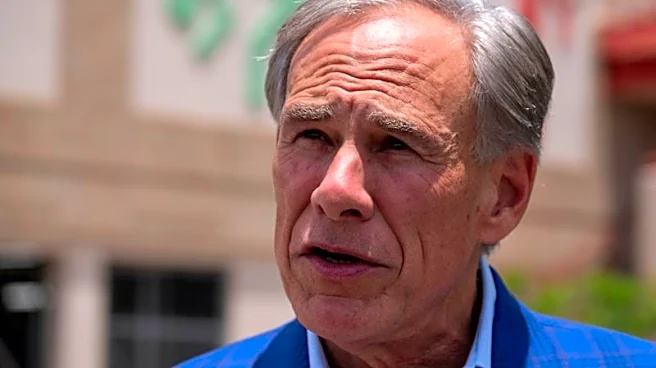
reporting a crime, stemming from a January shooting incident during Operation Metro Surge. Castro has been held in a Texas border town jail for nearly 90 days, and without Governor Abbott's signature on the extradition warrant, he could be released as early as August 27. Minnesota prosecutors have expressed concerns that Castro, who has strong ties to Mexico, is a flight risk. Governor Abbott has publicly stated his refusal to sign the extradition papers, citing a lack of trust in Minnesota Governor Tim Walz and demanding that Minnesota address alleged fraud in federal programs before he complies.
Why It's Important?
This legal battle highlights a significant interstate dispute over the constitutional obligation of extradition. Federal law generally provides governors with limited discretion to resist valid extradition requests, a principle reinforced by Supreme Court rulings. Governor Abbott's refusal to extradite Castro, linking it to unrelated allegations of fraud in Minnesota, introduces a novel and potentially problematic precedent for interstate cooperation in criminal justice. The case raises questions about the limits of gubernatorial power and the potential for political disputes to impede legal processes. If Castro is released due to the lack of extradition, it could undermine the principle of accountability for alleged criminal acts across state lines and create diplomatic tensions between states.
What's Next?
A U.S. District Court judge has fast-tracked an emergency hearing in Brownsville, Texas, ahead of the August 27 deadline for Castro's release. Both Minnesota and Texas have been ordered to submit written arguments by August 24, with an in-person hearing scheduled for August 25. The judge will decide whether Castro will remain in custody past the deadline. Regardless of the immediate outcome regarding Castro's detention, the broader legal arguments concerning the extradition process itself will be scheduled for a later date. This case could potentially lead to a significant legal precedent regarding interstate extradition and the powers of state governors in such matters.
Beyond the Headlines
This case delves into the fundamental principles of federalism and interstate comity enshrined in the U.S. Constitution. Governor Abbott's stance, linking extradition to unrelated political grievances, challenges the established legal framework for interstate cooperation in criminal matters. It raises concerns about the potential for politicization of routine legal processes and the erosion of trust between state governments. The outcome could have long-term implications for how states handle extradition requests, potentially encouraging other governors to leverage such processes for political ends. Furthermore, the case highlights the complexities of law enforcement accountability, particularly when federal agents are involved in incidents that lead to state-level criminal charges, and the jurisdictional challenges that can arise.