




What's Happening?
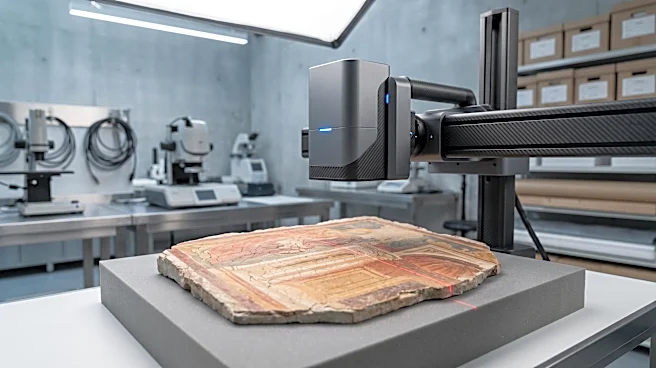
The Franciscan friars at the Basilica of Saint Francis of Assisi are utilizing advanced digital technology, including artificial intelligence (AI), lasers, and gigapixel cameras, to restore and preserve the 13th-century church. This initiative aims to address
the extensive damage caused by a series of earthquakes, particularly the devastating 1997 quakes that left over 80,000 fragments of the church unaccounted for. Sergio Fusetti, who has been involved in the restoration since the 1970s, noted the impossibility of manually reassembling these fragments, stating that 'Only artificial intelligence can help us here.' A team of art historians and software engineers, led by Giovanni Borelli, CTO of Haltadefinizione, is creating a high-resolution 3D digital twin of the basilica. This digital replica will serve as an exact reconstruction roadmap in case of future disasters and will be used by AI to identify and reassemble missing pieces, as well as analyze and address issues like cracks, discoloration, and lifting paint layers in minutes, a task that would take years manually.
Why It's Important?
This project signifies a groundbreaking application of cutting-edge technology in cultural heritage preservation, offering a model for similar efforts globally, including in the U.S. The use of AI and advanced imaging to restore historical sites demonstrates how technological innovation can address complex challenges that are beyond human capacity. For U.S. industries, this showcases the growing market for specialized AI and digital imaging solutions in sectors like conservation, architecture, and tourism. It also highlights the potential for job creation in interdisciplinary fields combining technology with humanities. Furthermore, the initiative to make the basilica's digital twin publicly accessible expands global access to cultural heritage, potentially boosting virtual tourism and educational opportunities for U.S. citizens.
What's Next?
The digital twin of the Basilica of Saint Francis is expected to be completed next year and will be made available to the public. Following its completion, the AI will be deployed to tackle the remaining restoration challenges, including the reassembly of the 80,000 fragments and the analysis of existing artworks for deterioration. Giovanni Borelli's team also plans to expand the use of this technology to make art more accessible, including virtual reality experiences that allow users to 'step inside' Italy's past and famous paintings. This could lead to new forms of cultural engagement and education, potentially influencing how museums and historical sites in the U.S. approach digital outreach and preservation.
Beyond the Headlines
The project delves into profound ethical and philosophical questions regarding the role of technology in preserving human heritage. While AI offers unprecedented capabilities for restoration, it also prompts reflection on the authenticity of digitally assisted repairs and the balance between human craftsmanship and algorithmic precision. The initiative to expand access through virtual reality raises questions about the nature of experiencing art and history in a digital format versus physical presence. Friar Giulio Cesareo views technology as a 'tool to reach the goal' of sharing 'this treasure, which is a treasure of faith and beauty,' suggesting a harmonious integration of ancient spiritual values with modern innovation. This blend of technology and tradition could redefine our understanding of cultural preservation and accessibility in the 21st century.